


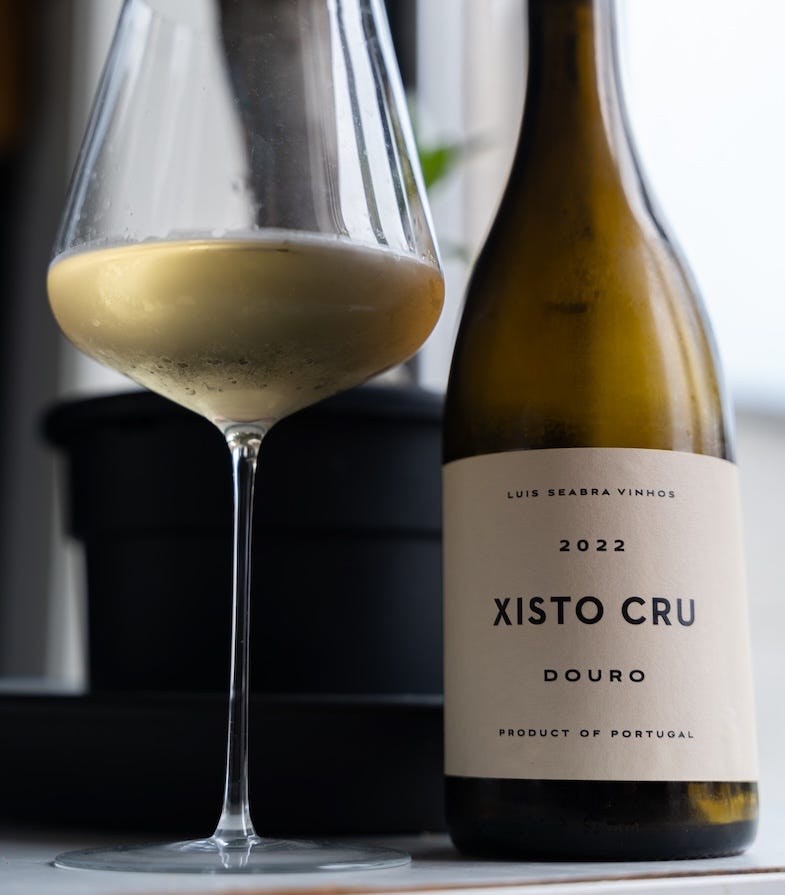
Xisto (loosely pronounced “shees-tu”) Cru Branco ’22 walks in wearing mineral heels and slaps your expectations with a schist glove: must be painful. It’s a Douro wine, yes—but not the one they warned you about.
There’s no oak monster lurking here, no tropical bombast. This is all finesse and friction, clean lines and cool granite calm. You may call it a white wine for red wine drinkers.
Luis Seabra belongs to the avant-garde of Portuguese winemakers—a bridge between overextracted tradition and nuanced, sleek elegance. After working with Dirk Niepoort, he forged his own Cru series in 2013, built not around grape varieties but individual vineyards. The man treats schist (xisto in Portuguese) like scripture—soil differences matter, high-altitude mica schist gives Xisto Cru its flex and steel feel.
The “Cru”, in Seabra’s vocabulary means “raw” and “real”, not Grand or Premier. Think vineyards with vines older than you, farmed with care, left mostly to their own quiet drama. Seabra is not out to impress you. Or does he?
Xisto Cru Branco is sourced from old vineyards in the Alvites and Meda zones of Douro Superior—high elevation, schist-dominated soils, and vines that don’t know what irrigation is. Grapes (mostly Rabigato, Codega, Gouveio, Viosinho, Donzelinho Branco) are picked by hand, pressed whole-cluster, and fermented with native yeasts in a mix of stainless and large neutral oak. There’s no new wood and no temperature control, no filtration, no fining. Aged on lees for a few months, picking up power and texture.
Verdict
Seabra’s Xisto Cru Branco isn’t for showing off—unless you’re showing off how good your taste is. It’s the kind of bottle that makes you pause, tilt your head, and go back for another sniff because what was that—quince? Fennel? White tea? Yes, and also: star fruit, camomile, mango skin and a flicker of sun-dried rock. If it sounds poetic, it’s because the wine is. There’s no delusions of grandeur, you’ll be welcome in anybody’s home.