


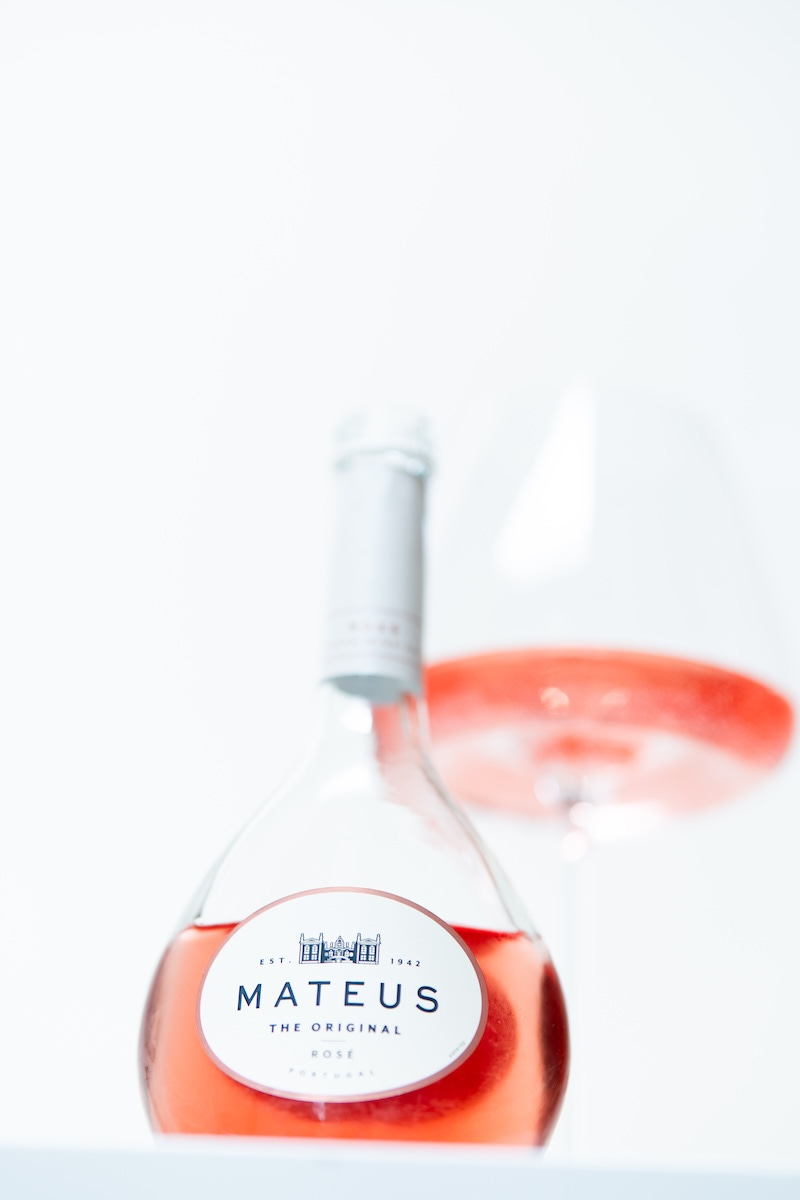
It’s the slightly fizzy, suspiciously pink potion in the canteen-shaped flask that has been squatting in the corner of your grandparents’ sideboard since before you were born. Love it or snob it, this liquid time capsule has a history soaked in wartime desperation, sheer hustle, and a hilariously tragic business deal.
A War, a Surplus, and a Little Sweet Sugar
It started in 1942 as a massive headache in the Douro Valley. With World War II crippling international trade, Port shipments cratered to under 11,000 pipes, leaving Portuguese growers drowning in unsold grapes. Over a dinner table that year, Fernando van Zeller Guedes and a crew of ambitious friends—either 15 or 30, depending on who’s telling the story after a few glasses—hatched a plan: make cheap table wine and export it to Brazil, which was conveniently neutral and Portuguese-speaking. On July 22, 1942, the outfit that would become Sogrape was born.
There was just one problem: pink wine was practically unheard of in Portugal. Guedes’s early batches were so horrific they had to be dumped straight down the drain. Enter a French winemaker nicknamed “Le Petit de Gaulle” (identified as Eugène Hellis of Quinta da Aveleda), who helped dial in the “secret” formula.
Guedes had a sharp, slightly cynical read on human nature: he figured that while people claimed to love dry wine, their tastebuds secretly craved sugar.
He deliberately left the rosé slightly sweet to snag broad appeal—targeting women drinkers in particular—using readily available local grapes like Bastardo, Touriga, and Tinta Francesca. High art? Nah, more like pure commercial instinct.
The Worst Business Deal in Wine History
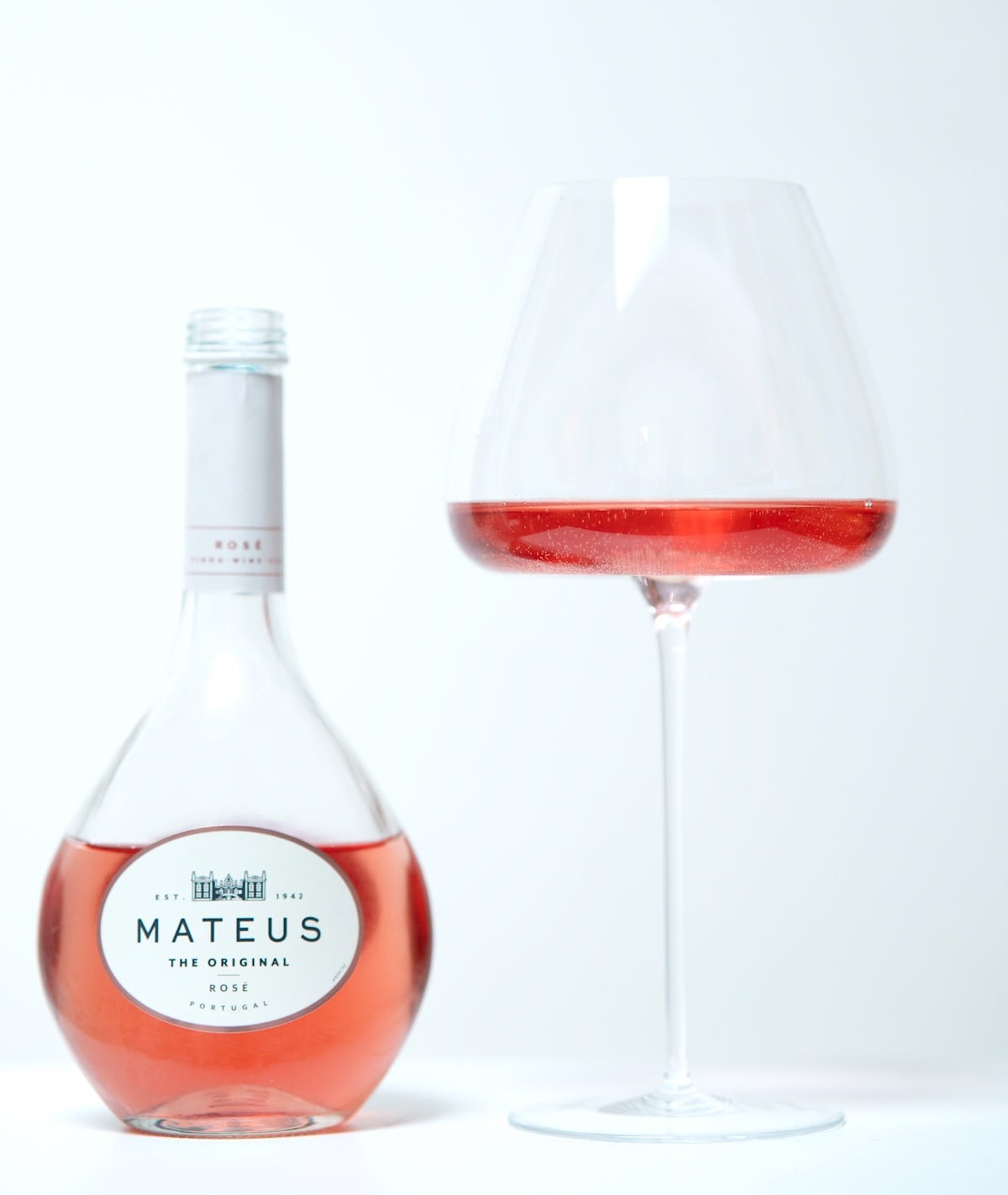
Every flask of Mateus sports an elegant engraving of the baroque Casa de Mateus palace. Built in 1744, the estate originally supplied grapes for the wine. Guedes thought the palace would lend a touch of aristocratic class to the label and offered the estate’s owner, the Count of Mangualde, a choice: a modest royalty of half an escudo for every bottle sold, or a quick lump-sum payment plus a premium on his grapes.
The Count, convinced this tacky pink enterprise would flop, scoffed at the royalty and took the quick cash.
It was a blunder of legendary proportions. As sales eventually rocketed past 50 million bottles a year, that tossed-away royalty would have yielded a staggering annual payout (estimated around 25 million escudos by the late 1980s). Guedes, enjoying the last laugh, later remarked with supreme chill that everyone makes mistakes sometimes.
War Canteens, Convent Bottling, and Guerrilla Marketing
The famous squat, flat flask wasn’t designed by a sleek agency; Guedes modeled it directly after First World War soldiers’ water canteens to ensure it stood out. The shape was a nightmare for mid-century factory lines. Early runs had to be hand-filled through rubber tubes out of barrels inside a convent near Porto’s waterfront. Before a modernized plant opened in 1967, an army of roughly 750 people was required just to manually bottle the stuff.
When Brazil unexpectedly slapped a ban on imported wine, Guedes pivoted with an epic guerrilla marketing scheme. He shipped pairs of Mateus bottles to Portuguese embassies worldwide and influential friends abroad. The instructions? Drink and chill one bottle; if you like it, give the second to someone who might become a local distributor. It was the original 1940s influencer campaign.
By the late 1950s, the world gave in. Jimi Hendrix was snapped chugging it straight from the bottle in 1966, Fidel Castro became a customer, and Queen Elizabeth II reportedly kept it on her radar.
In 1960s and 70s Britain, the emptied canteens achieved immortal kitsch status as candleholders and bedside lamps. By 1983, sales peaked at a mind-boggling three million cases across 125 countries, accounting for nearly 40% of Portugal’s total table wine exports.
What’s Actually in the Bottle Today?
The Douro couldn’t keep up with global thirst, so in 1975—amid Portugal’s Carnation Revolution—production shifted its hub to Bairrada, leveraging the crisp, high-acid Baga grape. Today, the classic blend pulls Baga, Rufete, Tinta Barroca, and Touriga Franca from across the country.
The winemaking remains surprisingly precise:
No Skins: Red grapes are pressed gently and fermented like white wine in stainless steel tanks without skin contact to achieve that signature translucent pink.
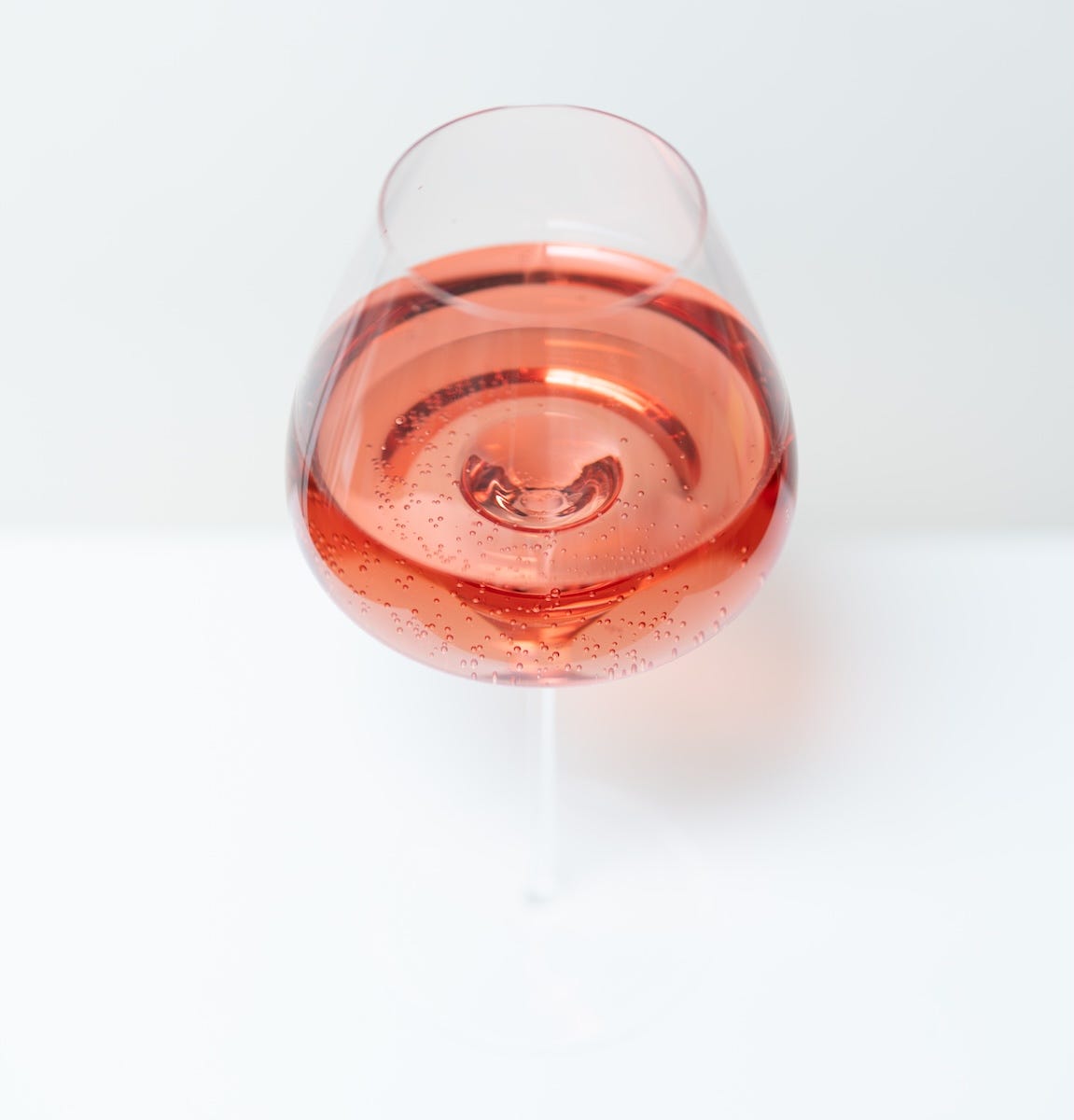
The Fizz: That light, prickling effervescence comes from a gentle touch of added carbon dioxide prior to bottling.
The Sugar: The classic Original style packs roughly 15 grams of residual sugar per liter, though the modern lineup has spun off into “Dry Rosé” variations (incorporating Shiraz) to cater to modern palates.
How to Drink It Without Crying
If you’re going to pop a flask of nostalgia, do it right:
Frigid Cold: Chill it down to 6°C–8°C.
Glassware Matters: Pour it into a tulip glass or flute rather than a heavy tumbler.
Keep It Dark: Sogrape switched from green to clear glass in the 2010s. Clear glass offers zero UV defense, making the wine prone to “light strike” if left out in bright lighting. Store it somewhere dark.
Food Pairings: The sweet-and-fizzy profile makes it an unpretentious partner for sushi, Thai takeaway, or spicy takeout.
Pour a glass, toast to the poor Count who took the cash, and enjoy the original pop star of pink wine.
Disclaimer: AI tools were used to fact-check and proof-read this text