


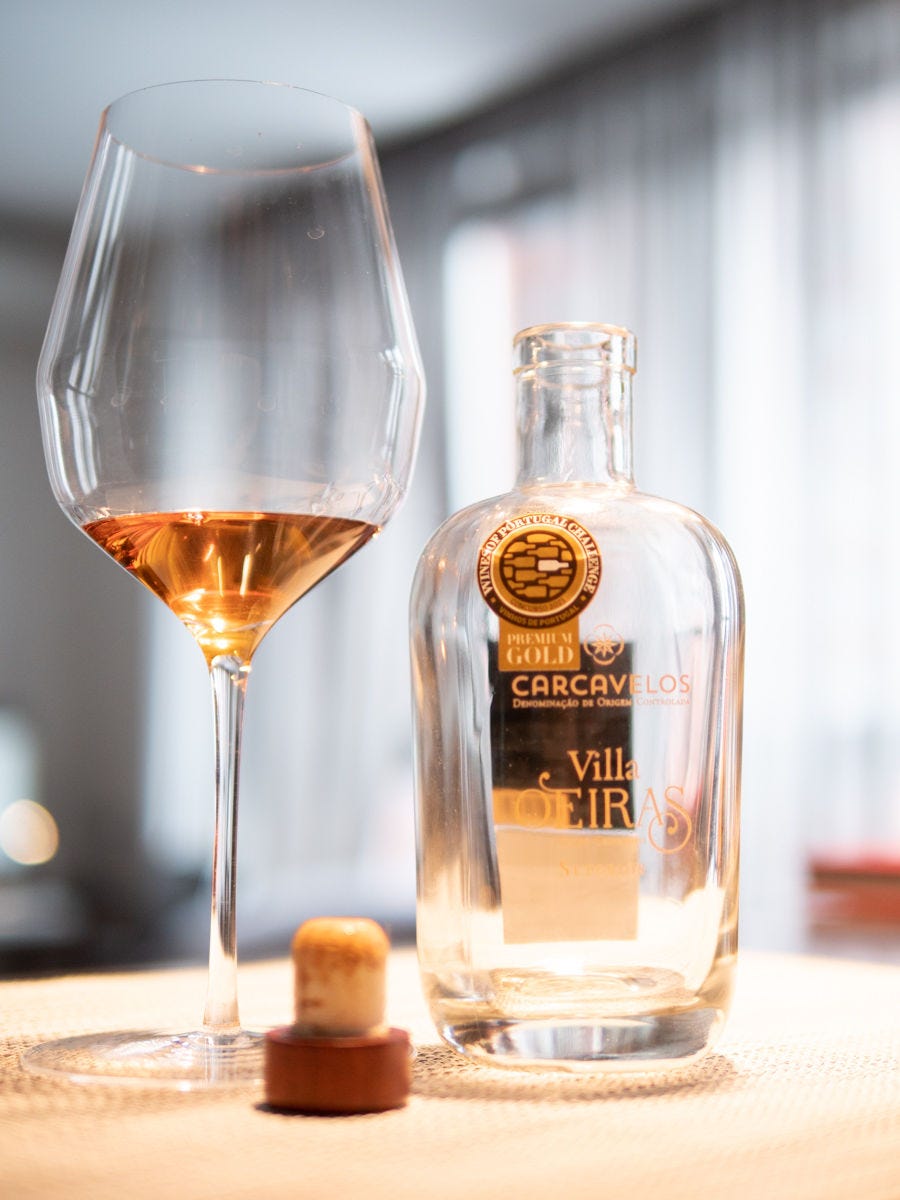
This micro-appellation just south of Lisbon—Carcavelos DOC—is, for all intents and purposes, a category of its own. “You’ve never tried Carcavelos? What kind of weirdo are you?,”—a Portuguese sommelier might ask you. Forgive him, it’s ok, not all sommeliers are as generous as Lisbon’s Vinho Generoso.
Where to begin? Probably where most don’t: Carcavelos is an ancient relic, a liquid listed in the “Red Book” of both global and Portuguese winemaking. Fortified wines are a deep, tectonic layer of Portugal’s history; without them, neither we nor they would have Port. But the Douro wasn’t the only place where people were spiking wine with brandy. Down here, right next to Lisbon, they’ve been cranking out fortified wines since XV century.
Then came the Marquis of Pombal—a local bigwig and the ultimate power player. Like Winston Churchill, he was a master of the blend, but local winemaking didn’t flourish solely because of his ego. It had a built-in guarantee of success: Lisbon was right next door.
The lone survivor: Villa Oeiras
Here’s another quirk of Carcavelos DOC: virtually only one producer is still standing—Villa Oeiras. Backed by the local municipality, this project was launched in 1983 to resurrect the traditional fortified wines of the region. Once upon a time this sub-region was one of the “Big Four” fortified wine heavyweights, alongside Port, Madeira, and the Moscatel of Setúbal. Then phylloxera arrived and effectively leveled the place, leaving almost nothing but dust. From other producers you seem to only get occasional very small-batch Carcavelos releases—definitely being lost in the global wine trade.
Today, Villa Oeiras consists of fewer than 30 hectares of vineyards. We’re talking about Gallego Dourado, Arinto, and Ratinho grapes, aged in French oak for 7 to 15 years. The terroir is pure clay-limestone, soaked in southern sunlight and whipped by north-eastern winds. These winds are crucial; they kick in during the afternoon and early evening, chasing away the nocturnal sea mists and drying out any excess humidity before the rot can even think about setting in.
The Carcavelos taste
Taste-wise the 7-year-old and 15-year-old wines’ expressions are worlds apart, yet the core DNA (at a sturdy 18.5% ABV) is unmistakable. The 7-Year-Old Villa Oeiras is cigar box, fragrant vanilla, apricot jam, and peach. There’s a distinct oceanic salinity here—the “salt and soil” of the Atlantic punching through the years spent in oak. The 15-Year-Old Villa Oeiras is a much more grounded balance. The vanilla and spices have been calmed by time. It has a more serious structure and a “sweet tooth” gastronomical edge, carrying the typical 80–95 grams of residual sugar per liter.
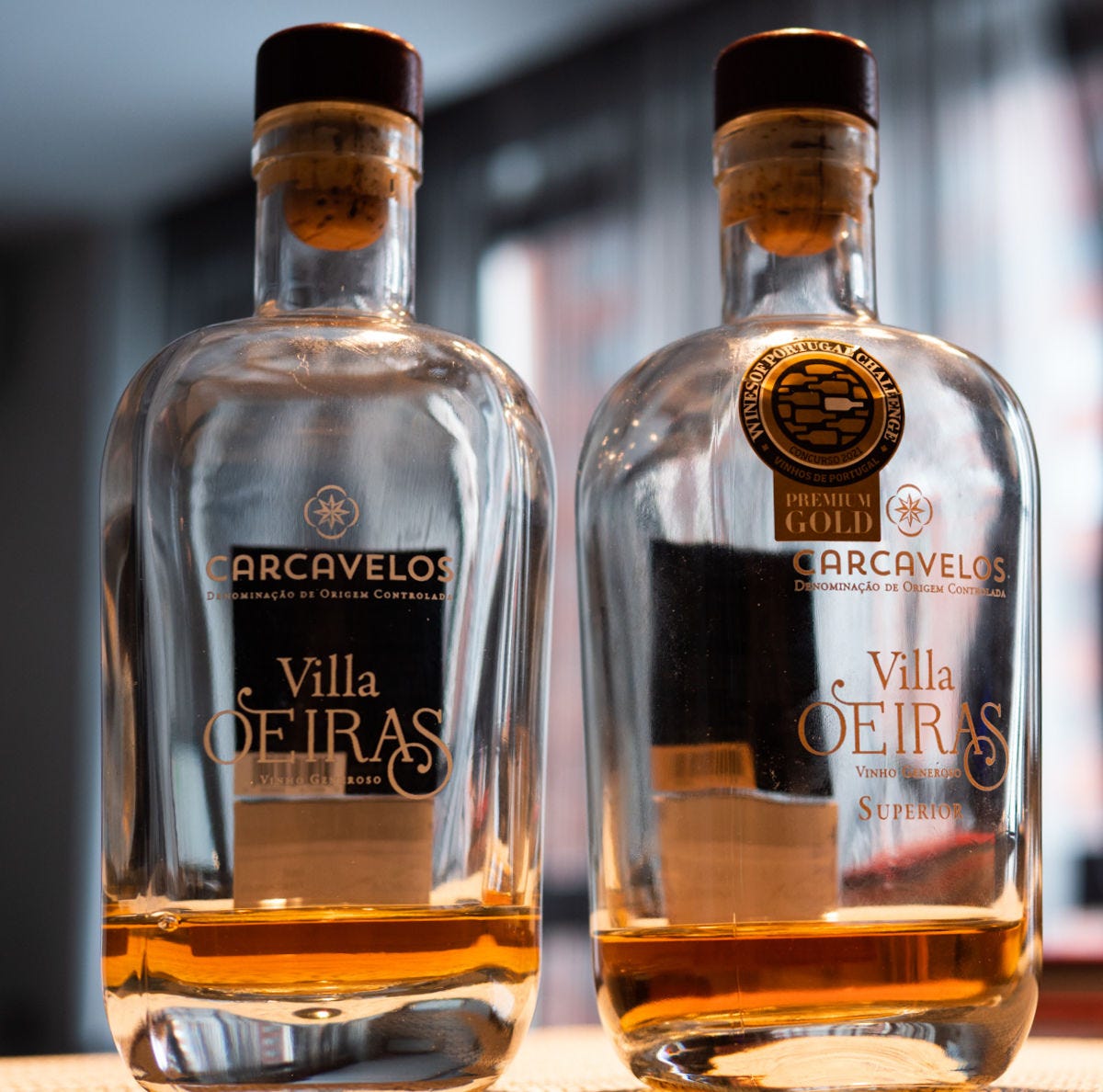
It’s worth noting that today, Carcavelos DOC is part of the Lisbon “cluster” of nine DOC appellations. Anything produced outside these specific zones is labeled under the generic Lisboa IGP banner. But let’s be real: Lisboa IGP is no Carcavelos. And it’s certainly no Villa Oeiras.