
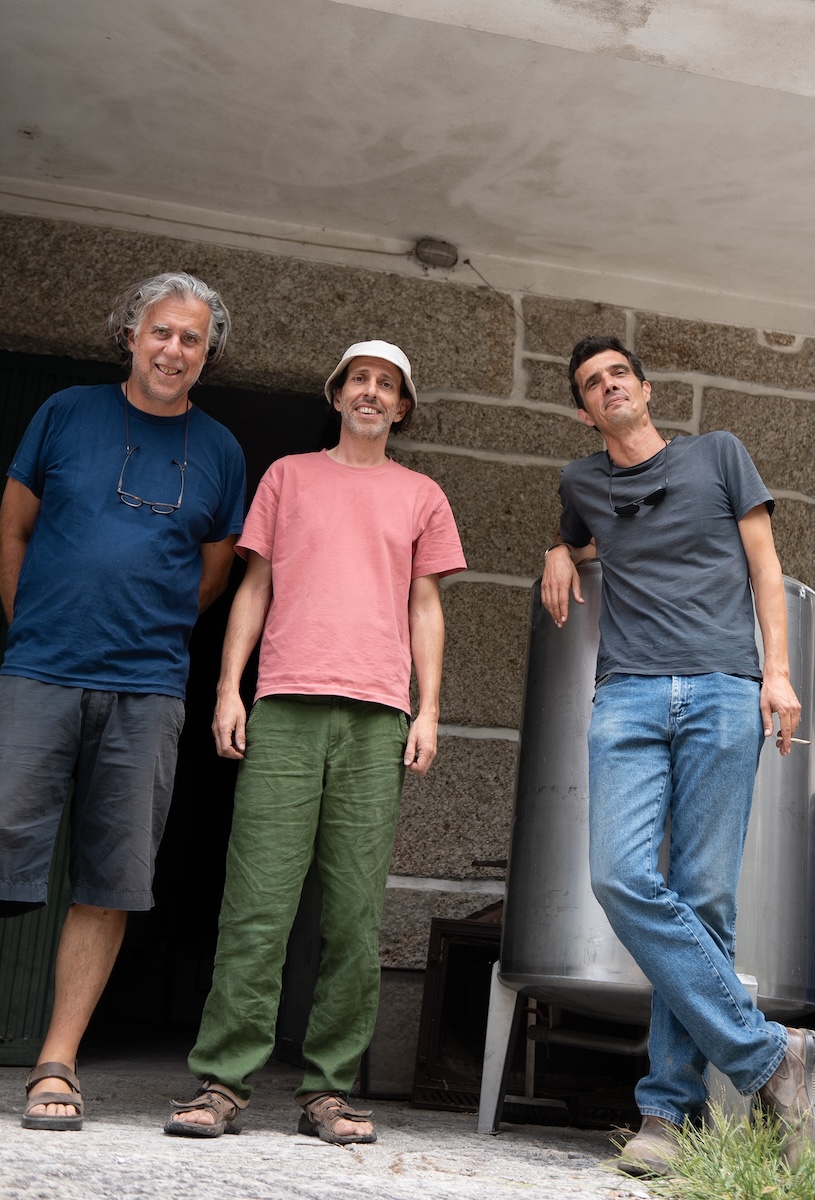
José Roseira doesn’t drive fancy. Neither do I: he picks me at a train station not far from Marco de Canaveses in the Amarante subregion of Vinho Verde to show something special: a true revived garage winery and what friendship leads to.
I wanted to visit because the wines they make at Quinta da Livração stood out to me due to their distinctive style. The other reason revealed itself more quietly: the man at the wheel, ferrying me to the winery, carried an almost disarming modesty—a hint of timidness so rare in winemaking that it felt like a secret quality I was swayed with.
The wine subzone of Amarante is not well-known to the general public in contrast to Monção e Melgaço or even Lima). Unlike the Douro river it falls into in the end, the Tâmega River flows from Galicia, crosses into northern Portugal near Chaves, and then streams south through Vinho Verde’s Amarante subregion before joining the Douro at Entre-os-Rios.
It’s here, in the lower Tâmega valley, just 10 km from the Douro, where Quinta da Livração, the HQ of RPM Wines and the house of José Roseira are located. Eleven hectares of terraces, forest, and vines perched on south-facing terraced slopes. Sheltered from northern winds and bordered by small watercourses, the land sits on granite soils enriched by the Verín-Chaves-Vidago hydrothermal system, whose mineral springs still feed the valley.
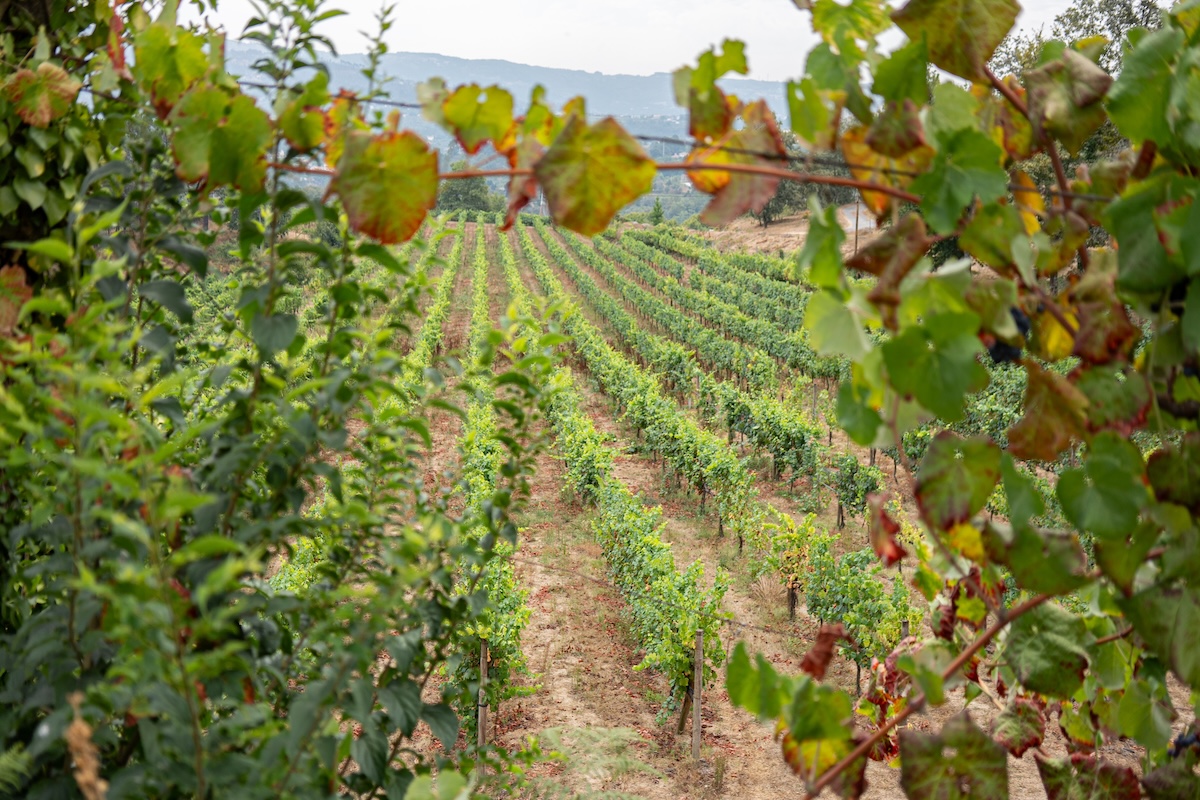
This farm has been in the Roseira family since 1935, when José Roseira’s great-grandfather, a Porto grocer, bought it. For decades its function shifted—vegetables, milk, corn, cows—before circling back to wine. Today, four hectares are planted with local varieties: Avesso, Alvarinho, Arinto, Loureiro, Azal, Castelão, Vinhão. The oldest vines, over sixty years old, are scattered across higher ground; the rest were planted in the early 2000s, when José began re-establishing viticulture with the explicit goal of making natural wines.
The Farm
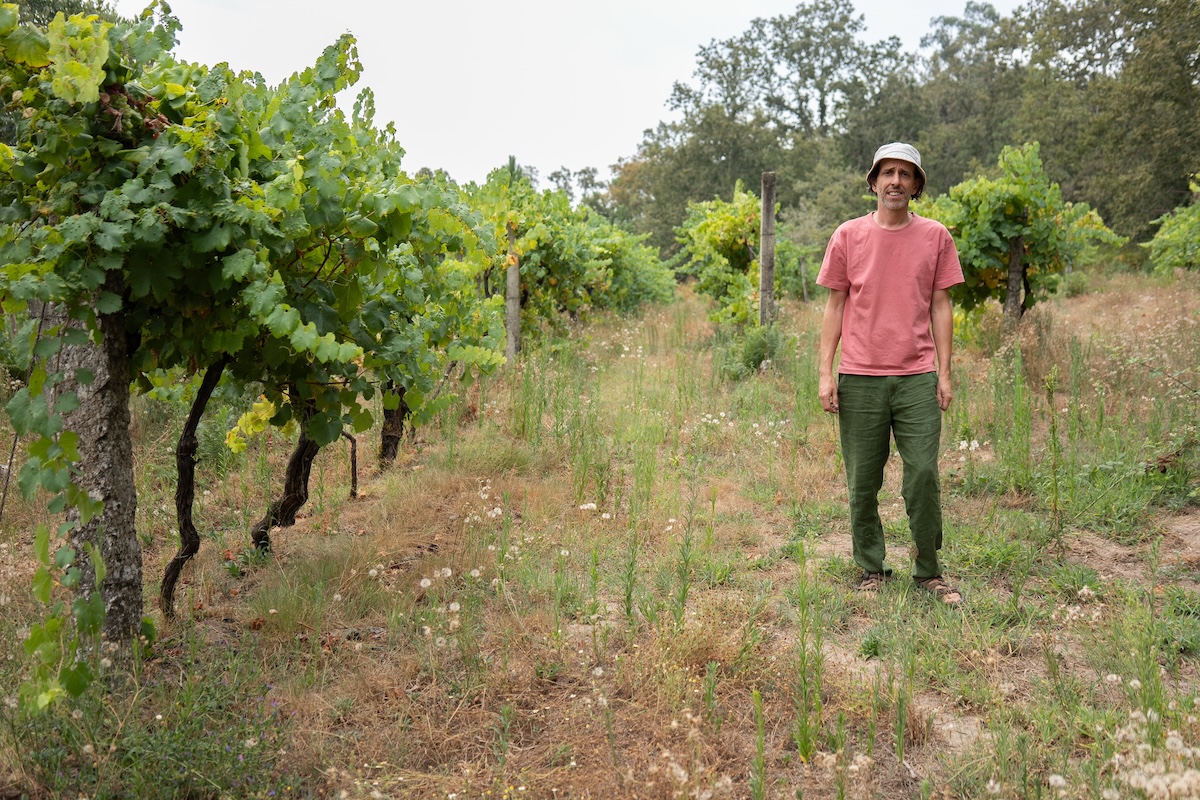
José walks me around the vast estate—quite fashionably it’s a mix of natural habitats: forest blocks, pasture, even kiwi plantations coexist with rows of healthy vines of different calibre, some quite old. Vines run along slopes and terraces, some planted in 1931, others in the 1970s and early 2000s. The old parcels are true field blends, co-planted with Avesso, Arinto, Alvarinho, Loureiro, and minor local grapes. Younger blocks are monovarietal, but planted at low density and still worked by hand.
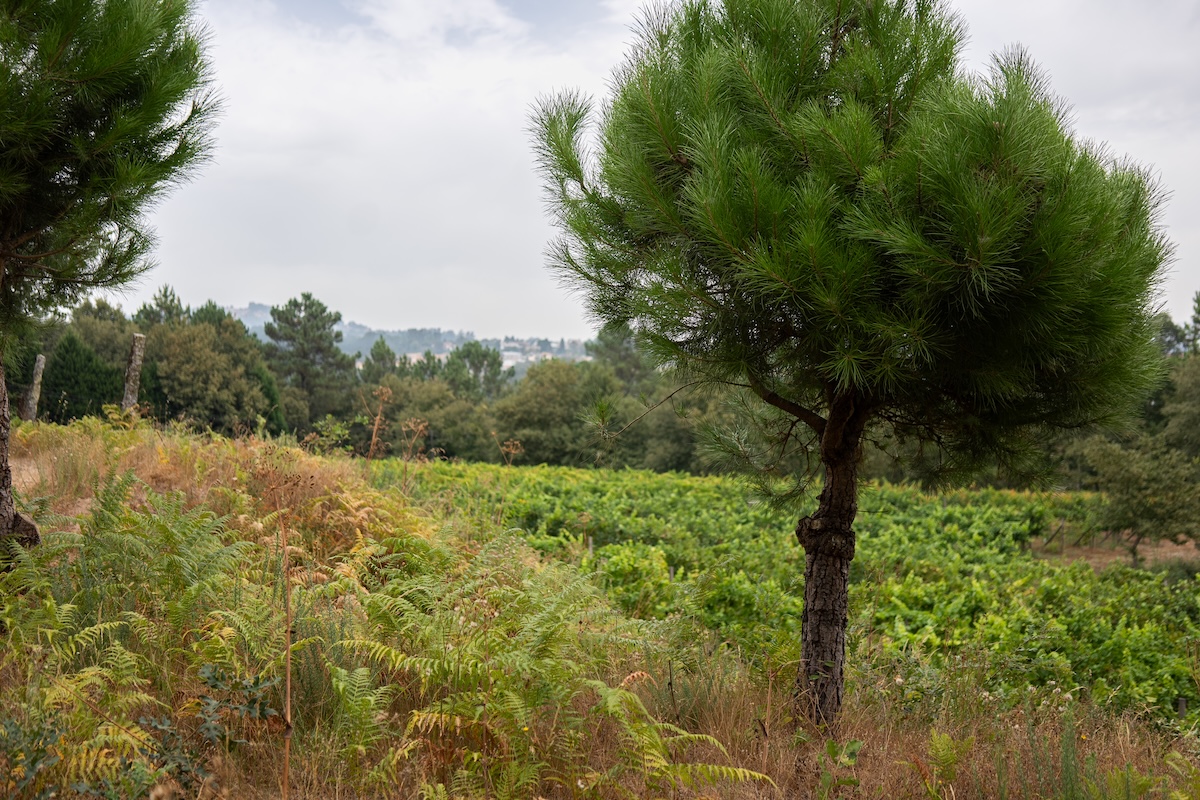
The farming is organic in practice but deliberately uncertified. José Roseira prefers what he calls “intentional organics”—no herbicides, no tilling of the soil, and almost exclusive use of copper and sulfur. Certification, he argues, would leave no flexibility in extreme vintages. Even so, in 2024 mildew destroyed 70–80% of the crop despite careful spraying. Abandoned neighboring vineyards worsen the problem, as untreated vines act as reservoirs for infection. All three men work in the vineyards, but José naturally spends his life among the vines and Daniel helps out when he can: “I help in the vineyard, yeah, sure. But my main job is connecting the wine to an audience—building the bridge from the cellar to the people.” He’s definitely more engaged in the promotion and sales of the wines.
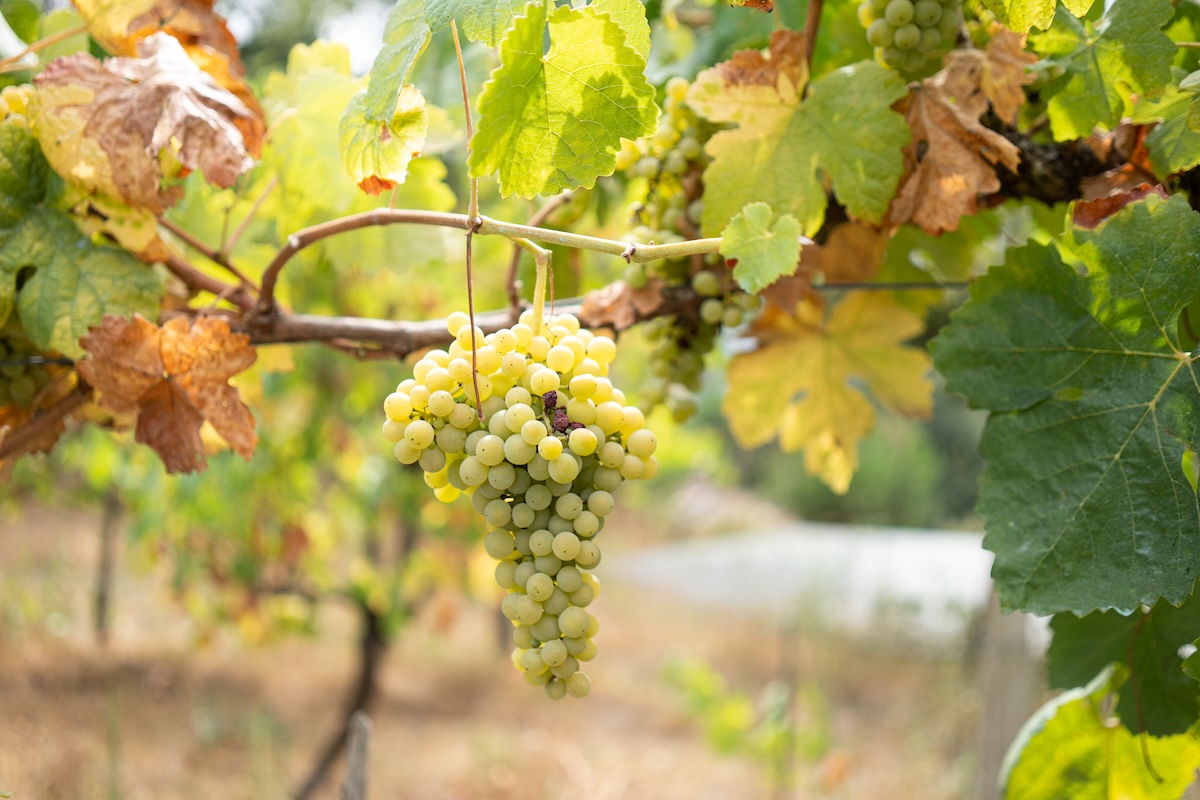
Canopy management has changed with the climate. A decade ago the vines were pruned hard; now foliage is left intact to shade grapes from the increasingly harsh sun. With August temperatures touching 42–45°C, unprotected bunches can be cooked in a single day. To cope, work in the vineyard begins at dawn, pauses in late morning, and resumes in the evening.
Replanting follows a massal logic: when a vine dies, a replacement is grafted from a neighbor with proven adaptation. Losses run to about 200 vines a year, less than one percent. Old selections of Arinto, Roseira notes, are rounder, more disease-resistant, and more complex than the clonal material widely planted since the 1990s. He is systematically propagating the older stock.
Animals are part of the cycle. Sheep graze the vineyards between October and March, clearing grass without compacting soils. Geese have recently been introduced for the same purpose. Compost comes from the estate’s forest prunings. Irrigation, installed briefly in 2010 to establish young vines, is no longer used.
The climate is shifting rapidly around here. In Roseira’s childhood, harvest never began before October. Today, early September is the norm, and in some years picking starts in late August. Timing the harvest has become the most critical decision of the season, as alcohol levels can spike within days.
The men behind
At the estate, we meet with three people behind the project—just back from the August holidays and approaching the most important harvest period. They are visibly sizing me up—how much do I know about wine, how much do we share? Share it all, say I.
What clearly unites these three men—José, Ricardo and Daniel—behind RPM Wines & Spirits is not a shared apprenticeship in enology, but something less common in the Portuguese countryside: a lifelong immersion in the arts, strong creative beats. José Roseira is the landowner, the fourth generation of his family to hold the estate since 1935. A writer and editor by trade, his background is in contemporary art and philosophy. His instinct is literary rather than agricultural; where his grandfather once looked at the farm as a source of milk and corn, José began to see it as material for a narrative of recovery, a place where the land itself could be an author. José’s spouse is another creative mind: I’m shown around the studio in one of the houses on the property, she’s doing creative arts and delivers her own expositions.
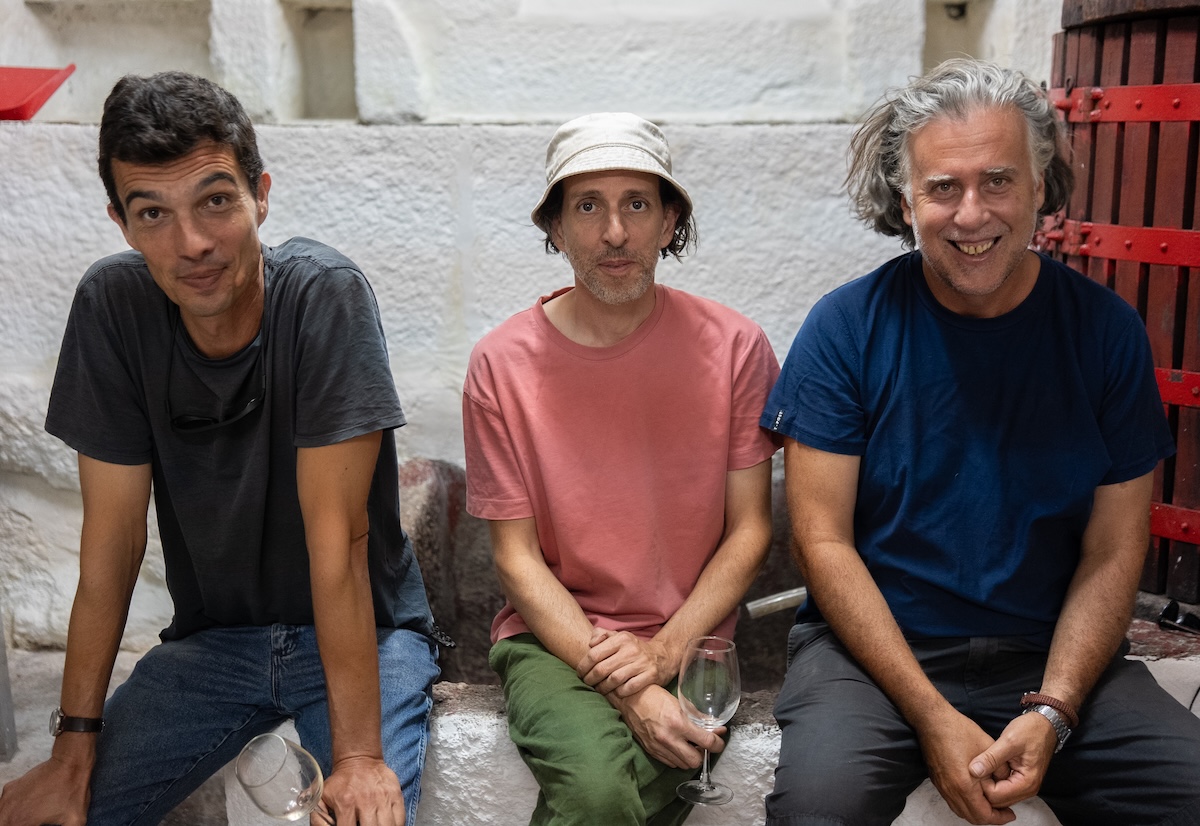
Daniel Pires comes from another frontier of culture: in Porto he is best known as the founder and director of Maus Hábitos, a hybrid space of exhibitions, concerts, and performance, which for two decades has been a meeting point for the city’s independent scene. His work is curatorial, experimental, tied to community and aesthetics. It was through him that José first met Ricardo Moreira. Daniel makes me nervous with my compact camera: back in the days he used to shoot for major glossy magazines—and I am here to shoot them with my questionable talents.
Ricardo Moreira is the winemaking force, the only one of the three who had already been making wine for some time, at his family ‘garage’ project Quinta de Penhó also in Vinho Verde, where he honed a taste for minimal intervention and natural ferments. He brings technical structure to the project, translating the cultural, viticultural and sales efforts of his partners into concrete practices—how long to macerate, how to rack by gravity, when to pick, etc.
There you have it: the three-minds collaboration is truly unusual—an editor-philosopher, a cultural impresario, and a winemaker—screams the singular identity of RPM, “revolutions per minute.” At Livração the gravitational pull of creative people is as strong as it is unlikely: no wonder the wines came to bear the names of Equalizer, Overdub, Reverb, and Analogue. More than playful references to the electronic music world they are actual metaphors drawn from a shared artistic vocabulary and connected with the reality on the ground. Modern marketing, in this sense, is not an afterthought, but a natural extension of who the partners are, a language they seemed to have already been speaking long before they bottled their first wine. Daniel confirms: “Marketing is not something we invented later. It’s who we are. The names, Equalizer, Overdub, Reverb—they’re already part of our vocabulary.”
Inner workings
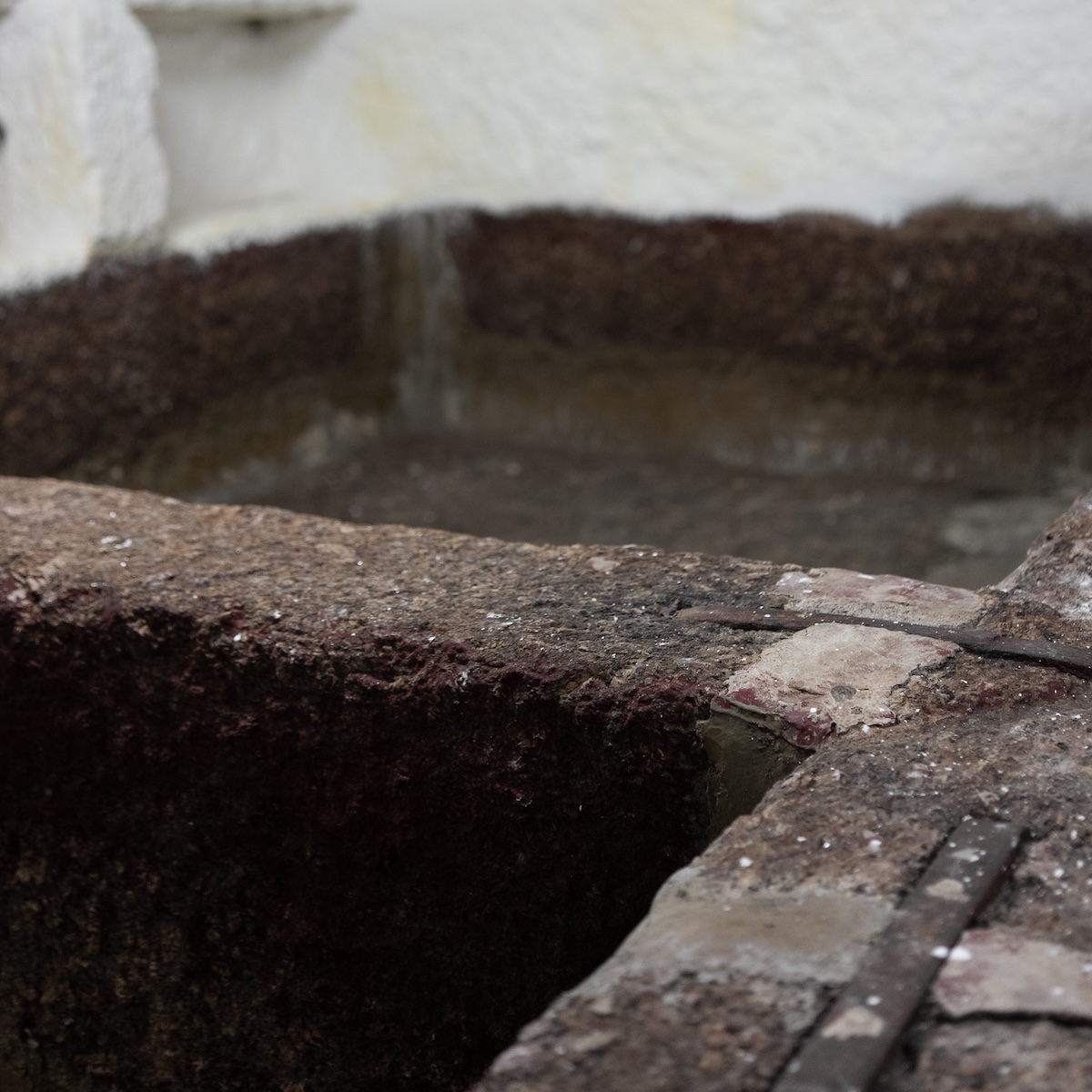
As per José, harvest at Quinta da Livração remains manual. Grapes are picked into small 20-kilogram boxes, destemmed, and moved to granite lagares more than 250 years old, to be then crushed by foot (they say ‘foot-trodden’). Fermentations occur spontaneously, without added yeasts. Depending on the cuvée, maceration can be as brief as two days or extend to two weeks.
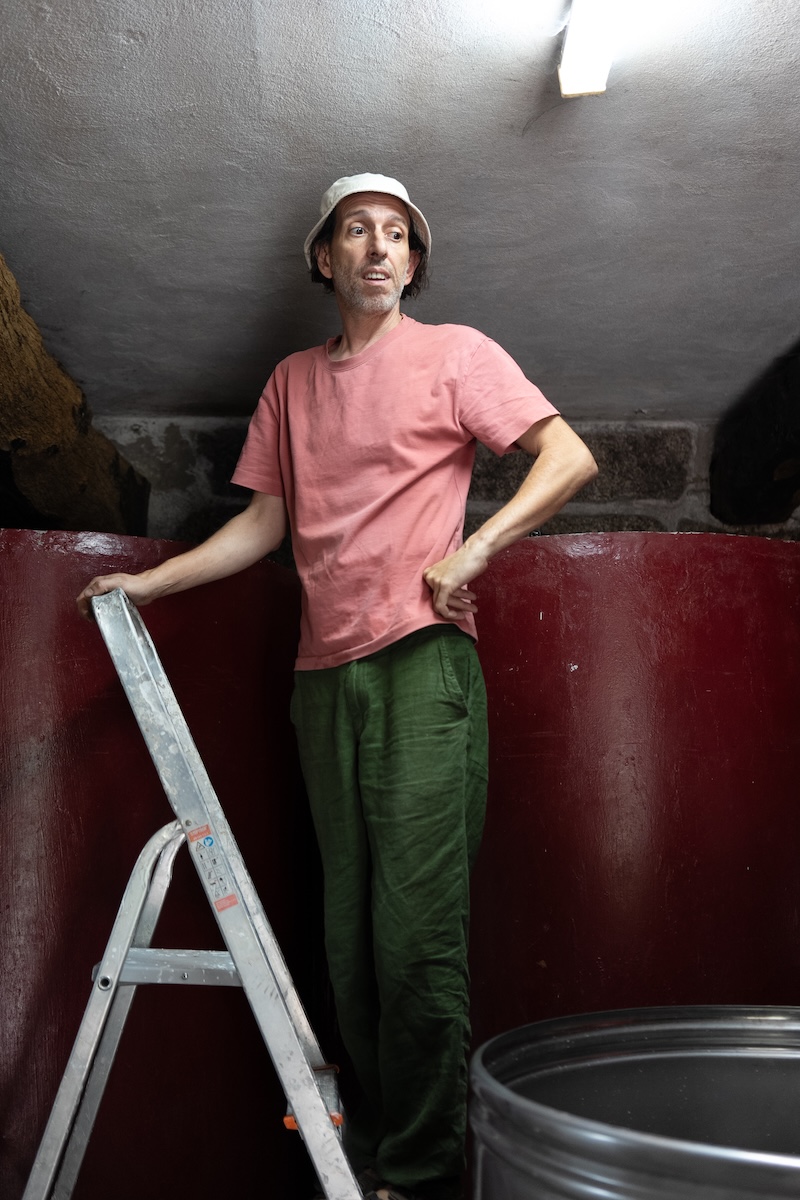
From there, the musts are pressed—by basket press, never by pneumatic—and run into cement vats dating from the 1960s. The wines remain on full lees for nearly a year, untouched, never stirred, unfiltered and unfined. No bâtonnage, no oak, no sulfur additions: the only sulfur present comes from the naturally sulfite-rich spring water of the nearby springs, which leaves its signature in analyses (around 18 mg/L on average), but stays low enough for even the most demanding natural wine lovers (I won’t judge!) to be satisfied. “For me, if you do the process carefully in this way, doing bâtonnage will only ruin the experience of the wine. It will dampen the aromas, the acidity. It will take out the acidity. And it will be too buttery,”—says Ricardo, leaning on the car and pulling out a cigarette near the Quinta’s wine cellar.
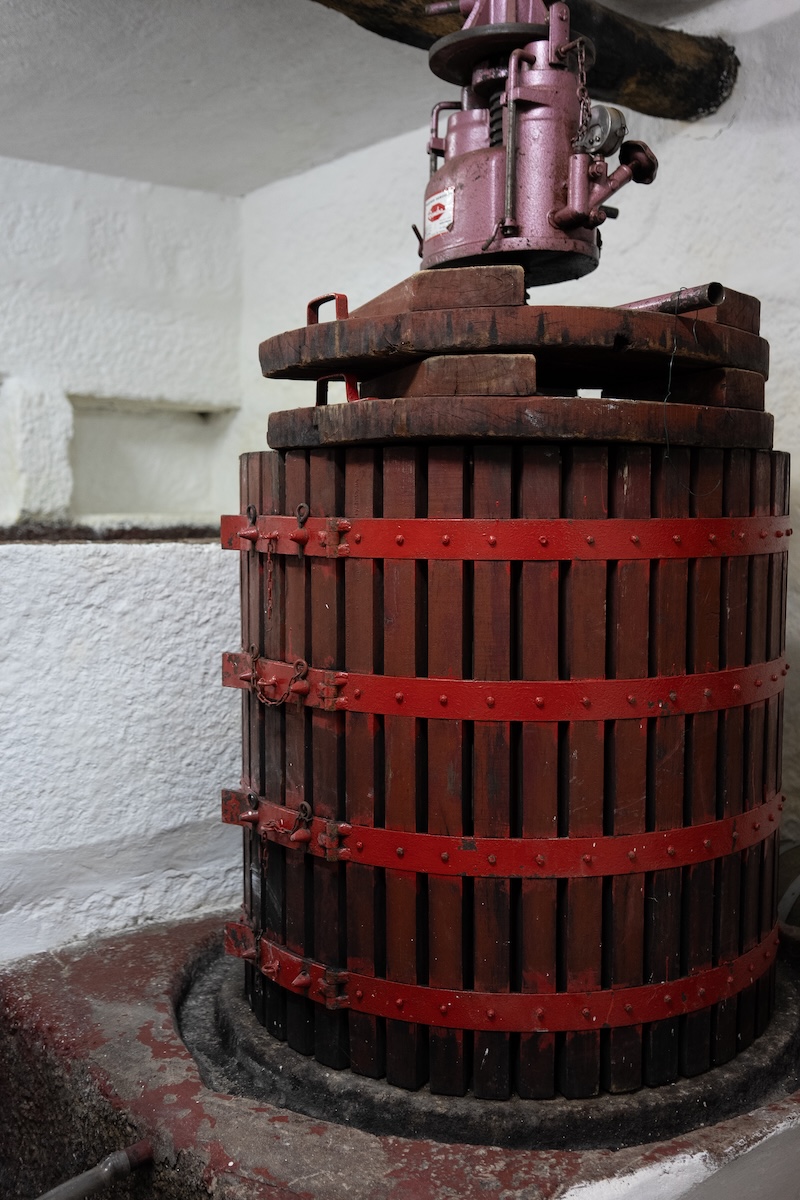
Ricardo’s approach to making RPM wines is simple: allow oxidation early in the process so that wines stabilize later; protect lees contact for texture; use gravity to move wines without disturbing sediments. Basket pressing is intentionally less efficient—juice losses of around 20%—but gentler, avoiding seed tannin. They’d actually like to press a little more to squeeze some more wine, but really can’t.
The Wines
So what about the wines, I hear you say? Four of the six wines are whites (Looper, Equalizer, Overdub Branco, Analogue), one is red (Overdub Tinto) and one is—well—orange (Reverb).
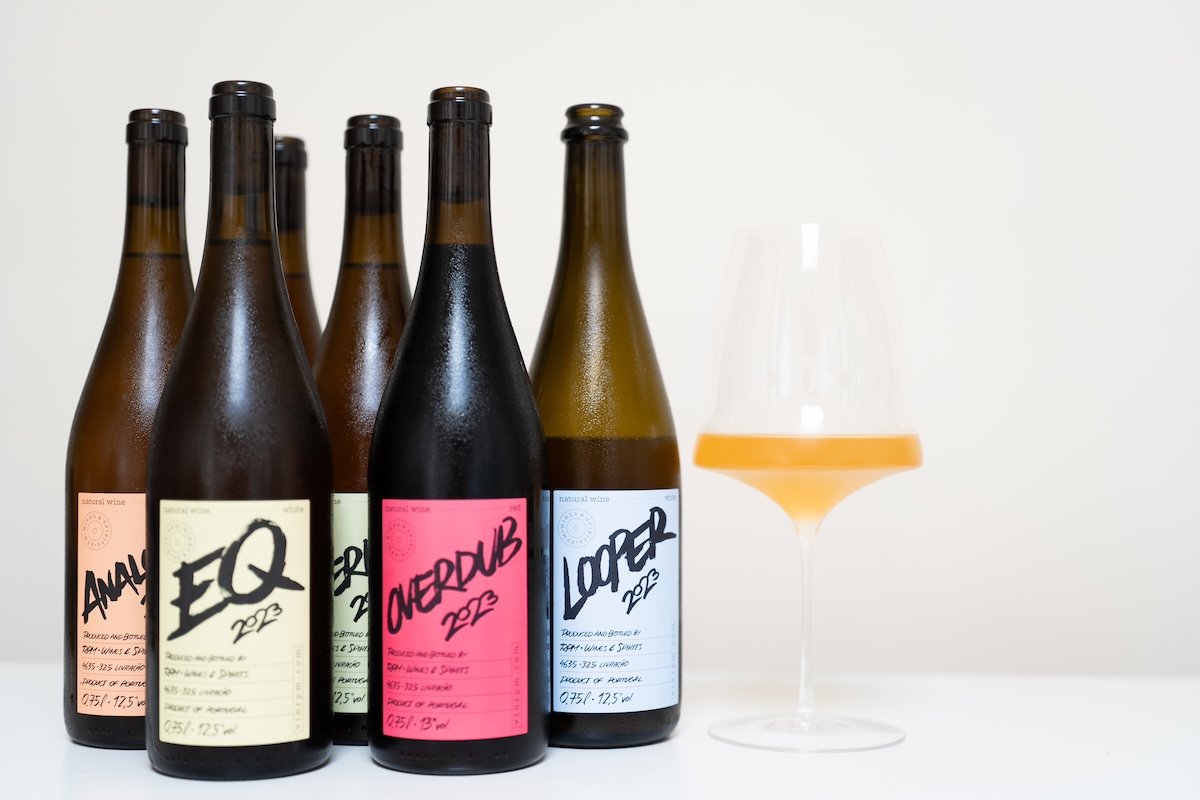
The slightly fizzy Looper is a pét-nat, with name referencing the “loop” of a second fermentation in bottle. Equalizer is a white blend, fresh but structured, aged in cement without stirring, Overdub—an old-vine field blend, layered like its recording-studio namesake. Analogue — a blend of Arinto, Avesso, and Fernão Pires (the latter two are cofermented). Reverb — a skin-contact white kept six months on skins and stems. Reds are rarer but striking: old-vine Castelão and Vinhão, a reminder that this pocket of the Tâmega is more borderland than stereotype, straddling the Douro and Vinho Verde. Annual output is about 15,000 bottles—tiny by commercial standards, but enough to establish a clear identity.
The amount of sediment could be an issue for some, especially as bottle is finishing. In this style varietal character is toned down due to maceration and cofermentation of grapes. Yet, Ricardo shows his non-interventionist soul here: “The problem of harvest is probably one of the most important decisions of the year. Well, if you don’t correct it in the wine. If you correct it in the wine, you can do whatever you want. But here, no—we decide in the vineyard.”
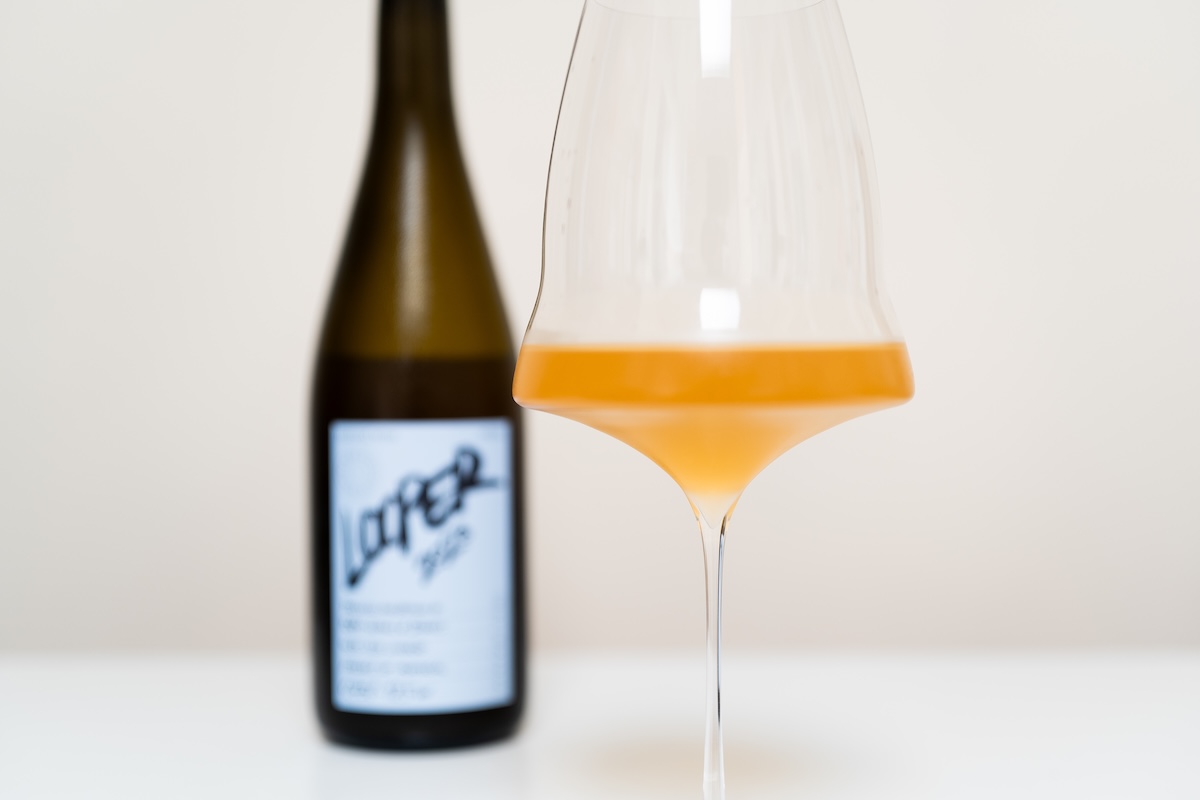
Looper 2023
A balanced, refreshing pét-nat of mostly Arinto and Fernão Pires. Super friendly unfiltered juice at 12.5%, technically from Vinho Verde region, bordering Douro in the village of Livração. Apples & grapefruit zest. On the oxidative side—nutty, yeasty. Voluminous because of hazy sediment–which I love here.
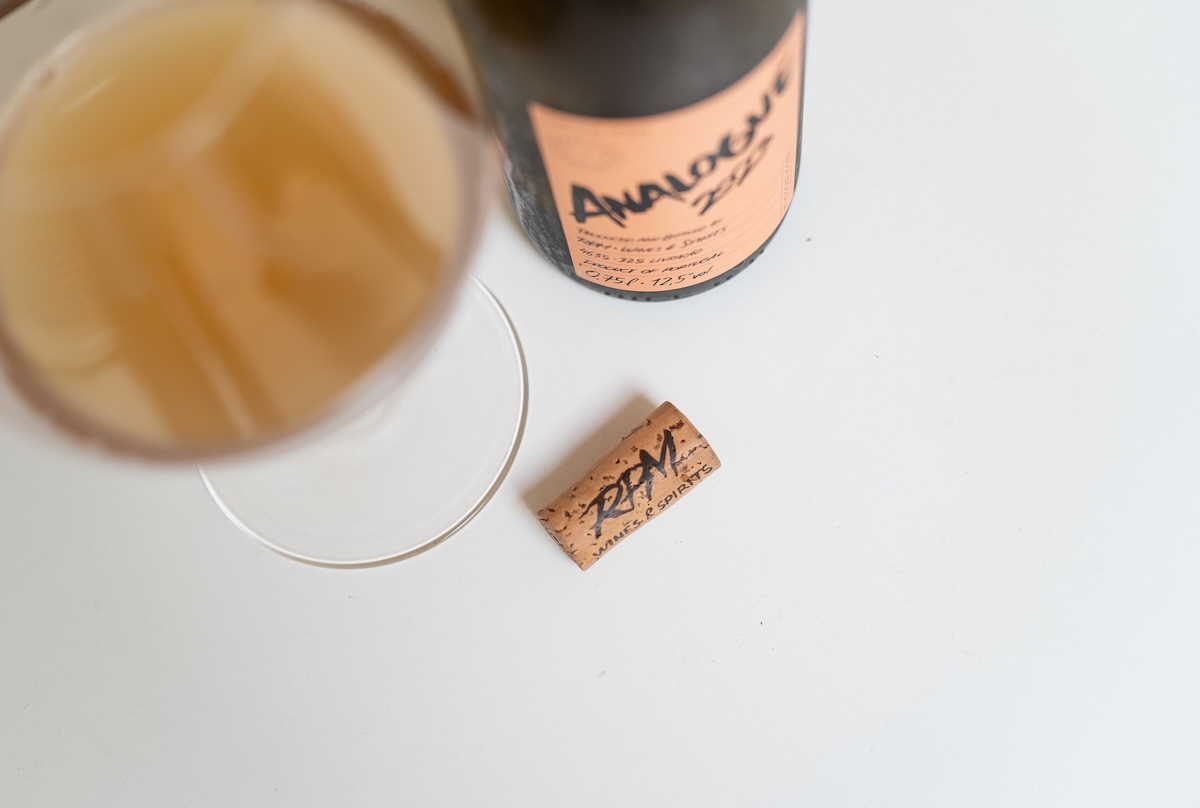
Analogue 2023
Wine with maceration offers freshness and big fruit, with notes of lychee and tropical fruit. Very thirst-quenching! Arinto, Avesso, and Fernão Pires. Easy, floral. I remember what Ricardo said: “The biggest challenge here is balancing the richness of the grapes. Especially Avesso, because it’s very powerful, very sweet on the mouth. It needs acidity but also needs body to cope with it. If you only have acidity you end up with a very sweet and acid wine that you have to drink very chilled, otherwise you don’t drink it. But if you have body and acidity and richness, you can drink it like this—it doesn’t need to be cold.”
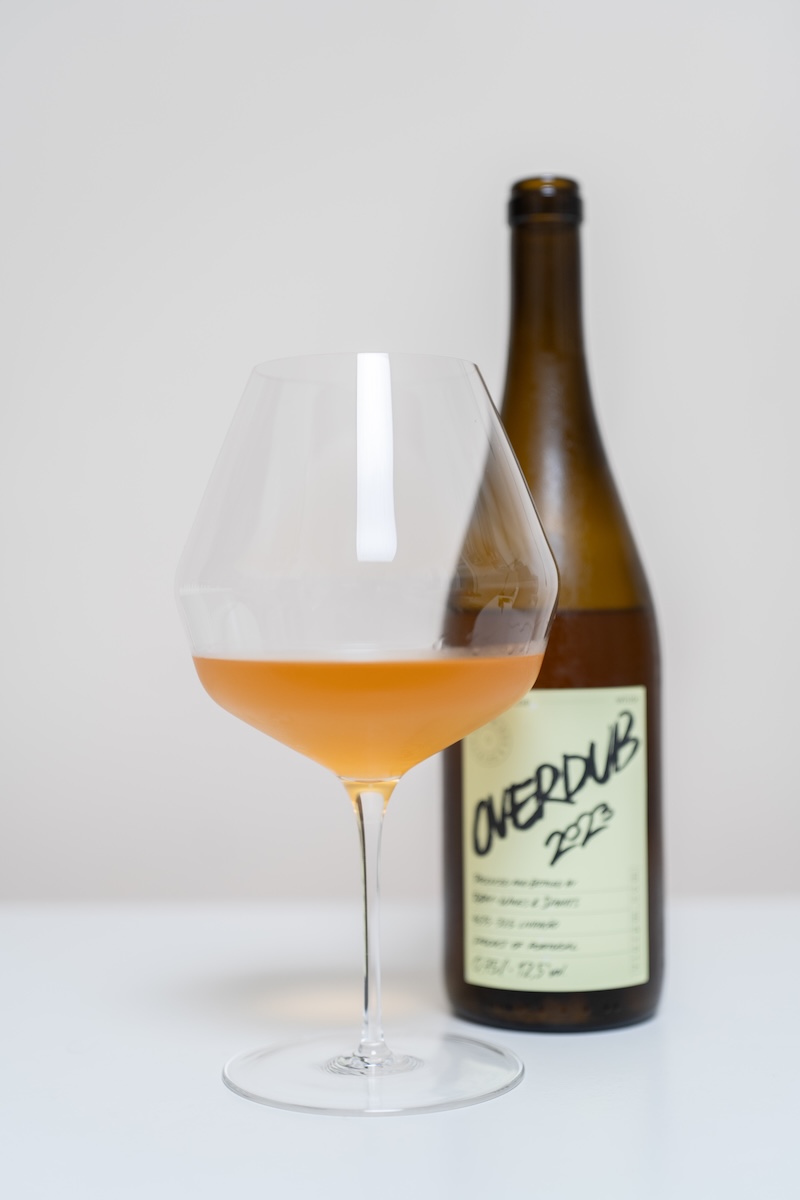
Overdub Branco 2023
Nice soft orange made with Arinto and Azal with eight days of maceration in lagar. The wine’s name says a lot: “Overdub is old vines, a layer on top of the other,”— explains Daniel Pires. To me it “sounds” intense, with deep taste and fuller body, a bit sweeter on the palate, with orange peel, honey, white flowers, and extremely light tannin. A real crowd pleaser.
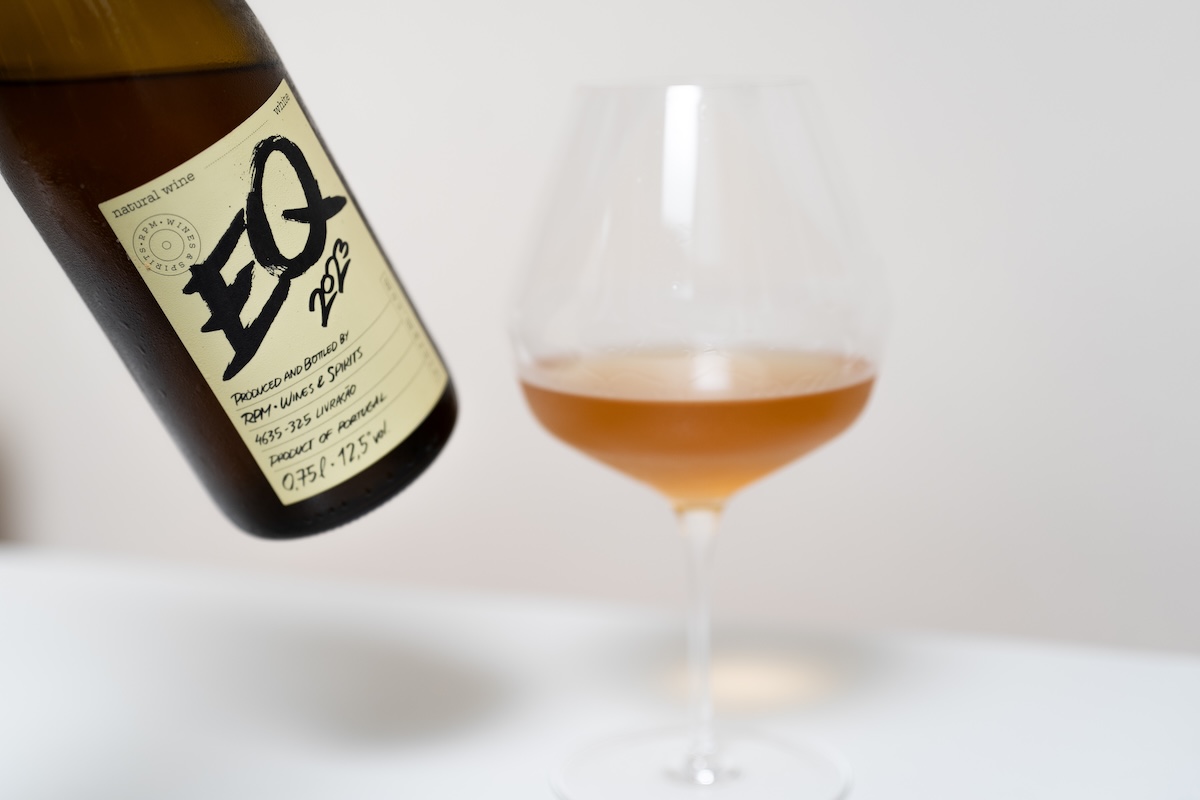
Equalizer 2023
Arinto and Loureiro in macerated style cofermented in a cement tank. Appley, cidery, quite fresh when cooled down. This one doesn’t like being warm and exposed. Drink fast!
Reverb 2023
Yellow and green macerated apple, thick, unfiltered made with Avesso spiced up with Castelão stalks. Initial three-day maceration and foot-trodding. It then macerates in a stainless steel tank for six months, in contact with the grapes’ skin and the stalks from the Quinta’s red wine.
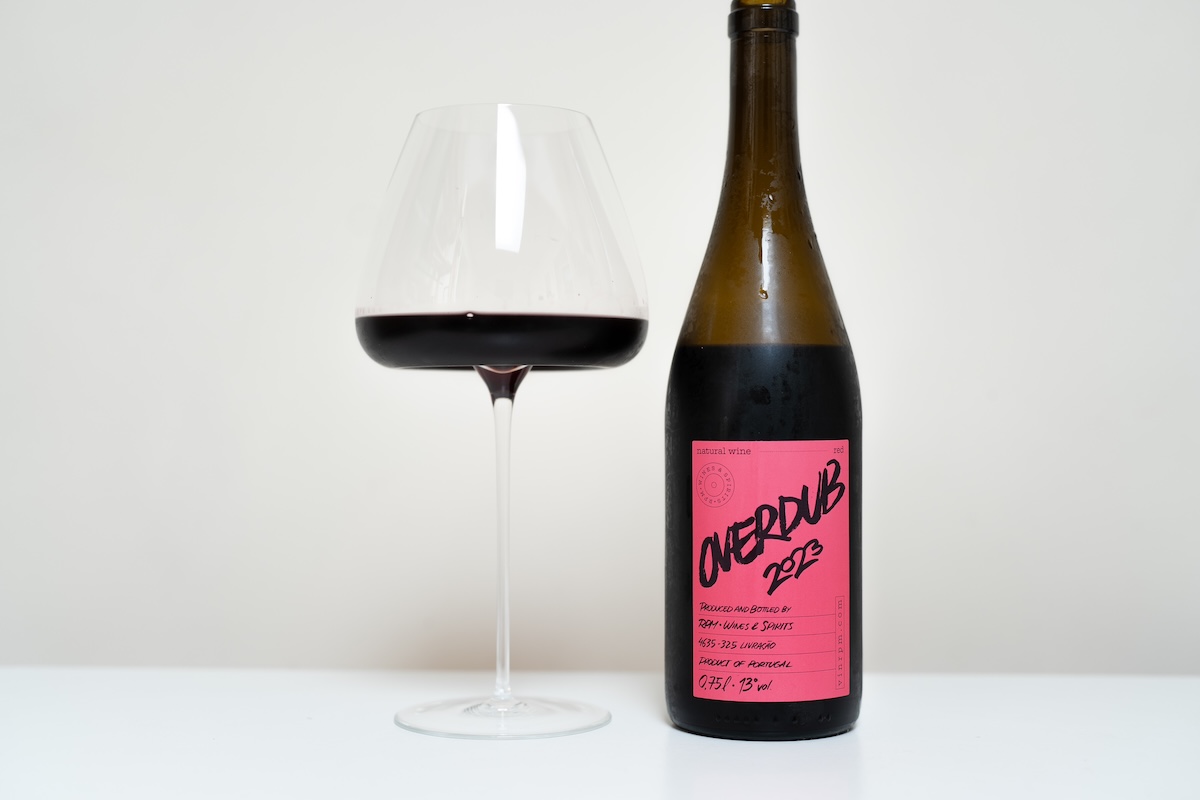
Overdub Tinto 2023
The only red in the line-up—and I’m loving it. It’s a fruity, lively Castelão grape, a very easygoing and chill wine. Gamay-ish, I’d say, with no signs of snobbery. Granite lagares for 8 days, then it goes on in concrete. Stonefruit dominant; some say it’s funky, I personally don’t find that.