
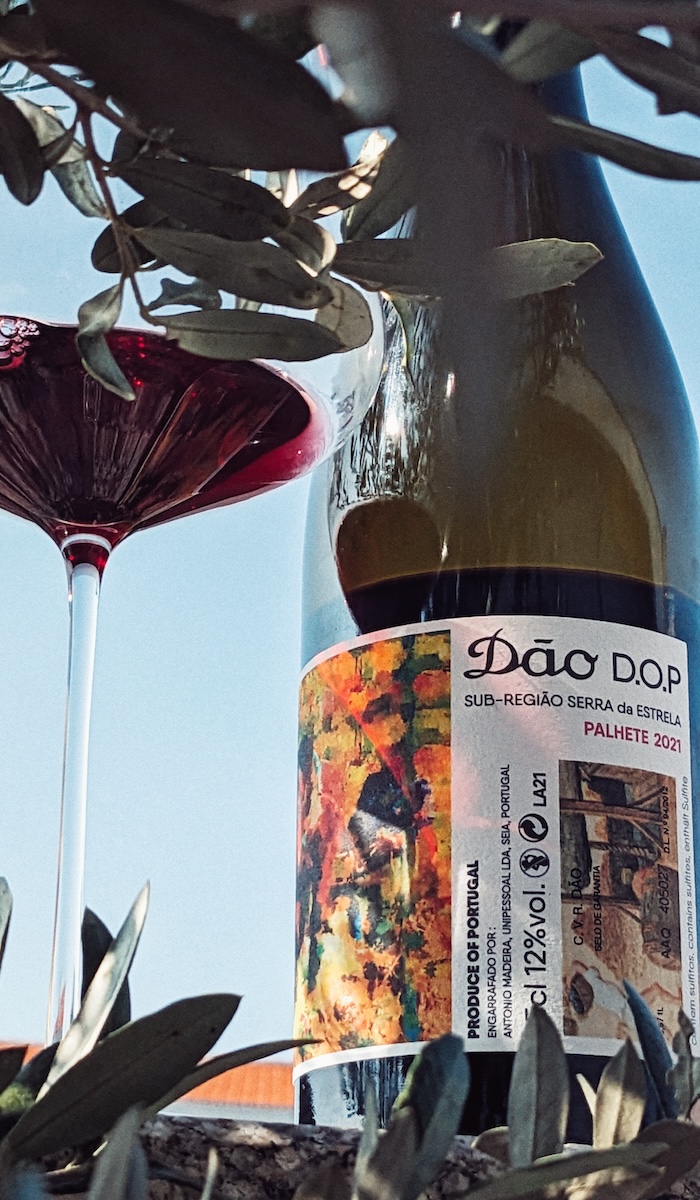
If someone told you a wine could wear the soul of red and the crispness of a white, Ainda 2021 would probably sidle over and wink. Palhete—Portugal’s winemaking moonwalk—is the art of fermenting red and white grapes together.
António Madeira’s version doesn’t stumble, it strolls with effortless grace. Crafted from centuries-old vines in the high granite foothills of Serra da Estrela, it’s a gesture both humble and radical—the sort of bottle that quietly demands attention before disappearing from the table as if it never existed.
A Parisian by birth, he returned home in 2011 and discovered what looked like abandoned old-vine treasure in remote plots—old vines of Tinta Pinheira, Negro Mouro, Tinta Amarela, Baga, and more, rooted in mineral-rich soils. Inspired by Burgundy’s sense of place and driven by Salvador’s vineyard DNA, he wears “natural” like a signature scent—organic farming, indigenous yeasts, near-zero sulphur—yet his wines feel anything but passive. Each bottle feels like an argument for terroir, purity, and patience.
Antonio Madeira has proven once and again he’s Dão’s truth-seeker, with even “base” wines hitting extremely high registers. Ainda is a field-blend of red and white grapes—one plot surviving over a century, others nearing it—co-fermented with zero artifice. All grapes are fully destemmed. A cold maceration at 15ºC kicks off an extraction phase of 4–5 days, then the cooling system yields to natural fermentation spanning another 15 days with gentle punch-downs. Post-ferment, the wine rests in stainless steel for 18 months—no fining, no filtering—preserving that sinewy texture and savory freshness typical of Madeira’s whites.
The palate offers silky, red-berry sweetness framed by a faint fizz—like an old friend tapping you on the shoulder mid-conversation. It’s full in structure yet light on vanity. There’s freshness, but not the factory kind. Herbs lurk in the background, berry juice brightens the mid-palate, and gas whispers tales of wild fermentation. Add in that granite-born salinity and finish—well balanced, deep, and vivid—and you’ve got something simultaneously rustic and refined.