
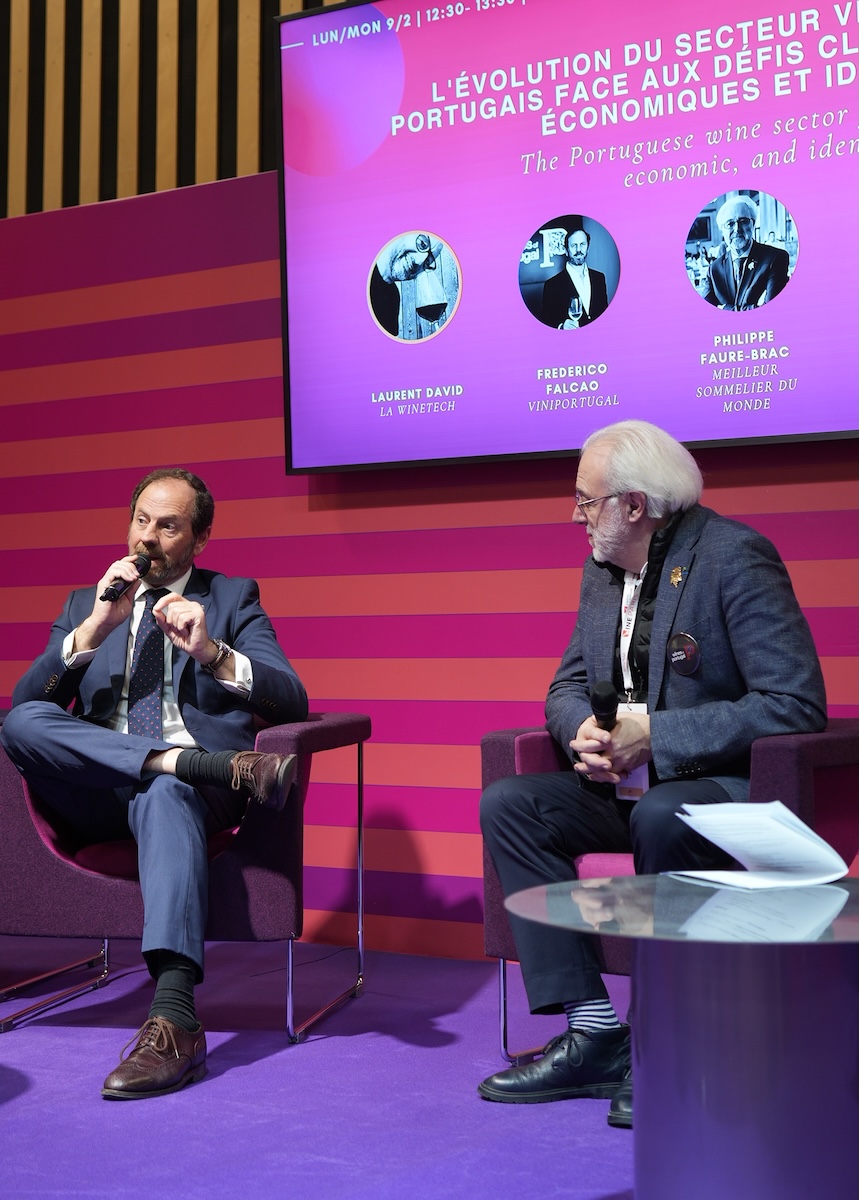
As the world continues to dramatically test the global wine industries across the globe, Portugal has to be ludicrously creative to make sure its wine sector stays afloat. That’s why I was interested to listen what the President of Viniportugal (Wines of Portugal) had to say about the state of the wine world affairs and the place of Portuguese wines in them.
As a backdrop Frederico Falcão outlined his assessment of the structural strengths and constraints of the Portuguese wine sector, framing them around diversity, climate pressure, varietal heritage, market positioning and sustainability targets. He described Portugal as “a very small country with a huge signature inside,” arguing that territorial fragmentation is central to its identity. “If you drive for half an hour, everything changes—the climate, the grape varieties, the soils, the food, and even the people’s accents.” He characterized this as a huge diversity within a very strong country.
On climate conditions, Falcão acknowledged that “it has been warmer and drier,” and that the year was difficult, citing a very cold and rainy start: unusual, particularly for the Douro. Vinipotugal’s President linked resilience to genetic resources, stating that “one thing that helps us overcome these problems is our huge variety of native grapes.”
Falcão emphasized the scale of that resource with Portugal having more than 250 native grape varieties to play with. He maintained that the country is “a world leader when it comes to the DNA study and preservation of these varieties,” adding that “we have them all studied and archived.” Interestingly, despite three decades in the sector, he said he personally knew maybe 35 to 50 of them, concluding that “there is still so much to be discovered.” Some varieties, he noted, “withstand heatwaves and behave better with a lack of water.” He pointed out that Touriga Nacional is now even used in Bordeaux, and, likewise described Alicante Bouchet as a variety that “found its home in Portugal.”
In discussing the Douro, Falcão stressed the region’s structural complexity: “there are more than 60 types of schist in the valley… and vineyards range at 100 meters altitude near the river up to 600 meters in the highlands, with marked climatic contrasts across short distances. He called it “a nightmare” to explain this diversity to consumers, while also stating that it is the country’s strength.
From a promotional standpoint, Frederico contrasted Portugal with more varietally simplified markets: “If I were in Argentina, you would ask for a Malbec and know what to expect.” In Portugal, he said, it “could be a Vinho Verde, a strong wine from the Douro, or an elegant one from Dão.” As a result, “it’s difficult for people to understand,” and the organization relies on trade education and masterclasses to communicate that Portugal offers “a world of difference,” the Viniportugal’s communications motto.
On stylistic evolution, Falcão described a shift beginning roughly 30 years ago, when Portugal moved from a largely closed domestic market to broader exports. At that time, producers planted international varieties like Syrah and Cabernet to create a style that was easier for new consumers to understand. He said that over the last 15 years no one’s been planting Syrah or Chardonnay, with producers instead “going back to our roots,” re-emphasizing native varieties and pursuing “a more ancient, technical, and respectful style.”
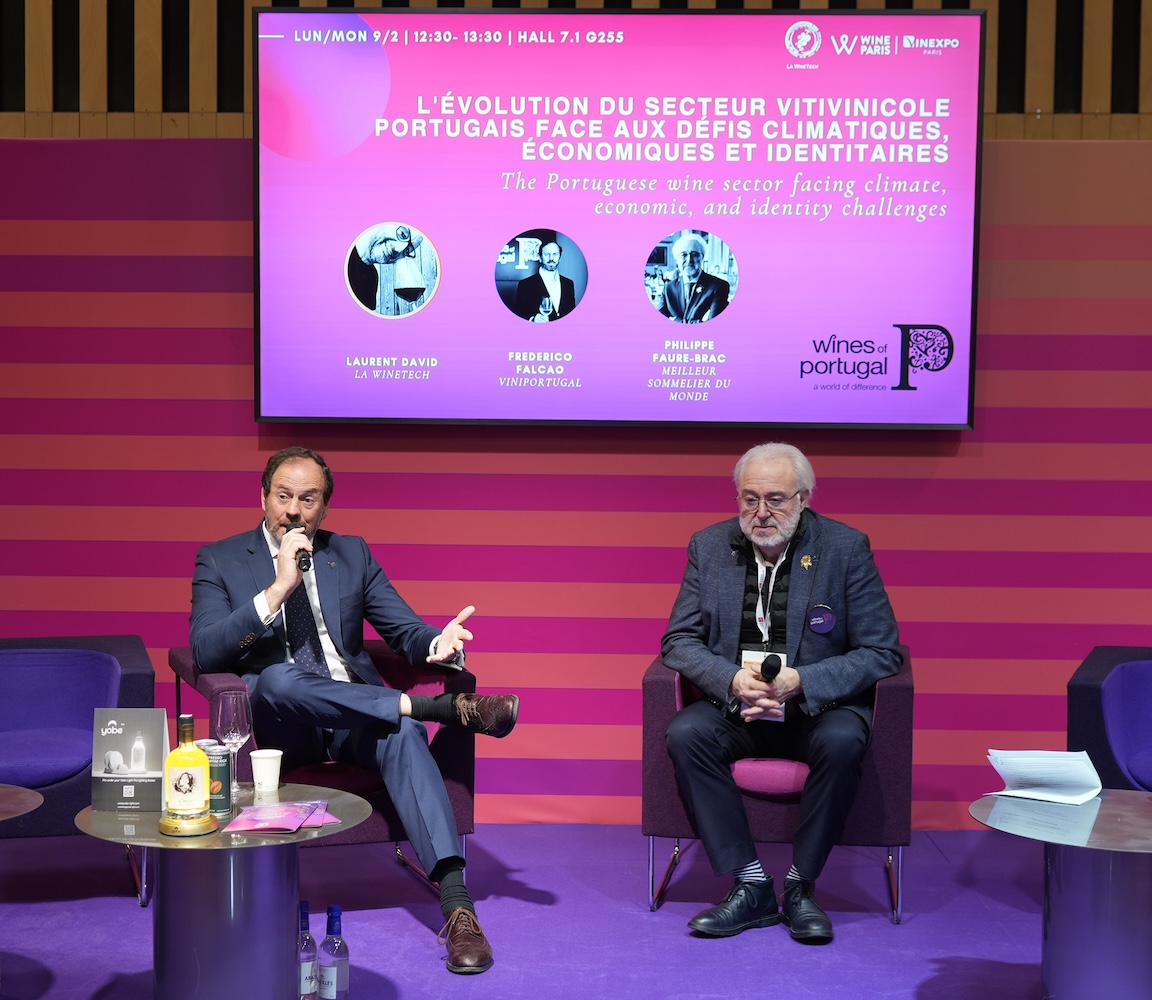
Institutionally, he described Portugal as “the only country with a Wine Institute that regulates the sector,” while Wines of Portugal handles promotion. He noted the creation of a national sustainability framework five years ago, designed to be “easy to communicate.” The stated objective is to have “40% of production certified sustainable within four years.”
On the domestic market, Falcão remarked that “Portugal is number one in the world for wine consumption per capita,” attributing this partly to culture and partly to tourism. He described “a direct link between tourism and export growth,” arguing that visitors encounter Portuguese wines locally and later purchase them abroad. Despite broader international declines in youth consumption, he stated that in Portugal wine “is cultural,” and that young people “still share a bottle of wine.”
Looking ahead, Falcão stated that the country does not aim to expand volume significantly, concluding: “we don’t have much more wine to sell in terms of volume,” therefore “we must grow in value and average price to remain economically sustainable.”