
Lisbon is neither Vienna, nor Bordeaux: you won’t find pretty vineyards scattered in the city’s plain view. Alas! Still one winery located within the city borders is open for visits: Adega Belém is actually very easy to reach and is located very close to the beloved recreational area of Lisbon, well, Belém. Besides, if you’re visiting the famous Belém Tower on Tejo river and the astonishingly beautiful Monastery Dos Jerónimos (both are UNESCO heritage sites), stopping by the Adega either for a tour or a glass with petiscos makes perfect sense.
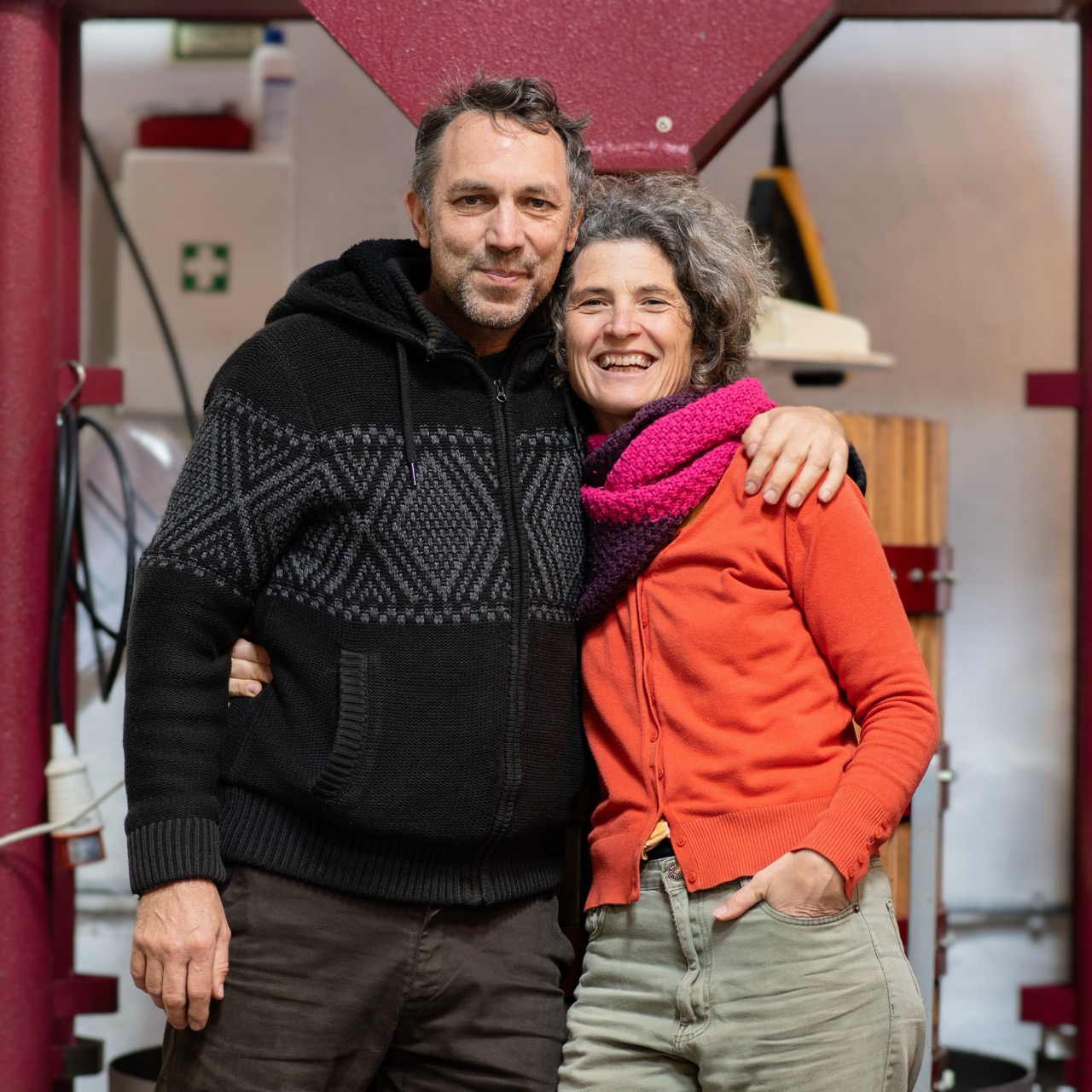
What do an evolutionary biologist and an anthropologist do in Lisbon? Obviously, make wine. Catarina Moreira and David Picard, after meeting in 2009, decided to pivot from their academic careers to pursue winemaking, with their first vintage welcomed in 2019. It’s a small, “garage-size” operation: don’t expect huge tasting rooms or elaborate cellars. Yet, the winery sits well in line with their vision of low-volume high-quality production following the approach of non-intervention, meaning, no unasked for chemicals and least winemaking manipulations.
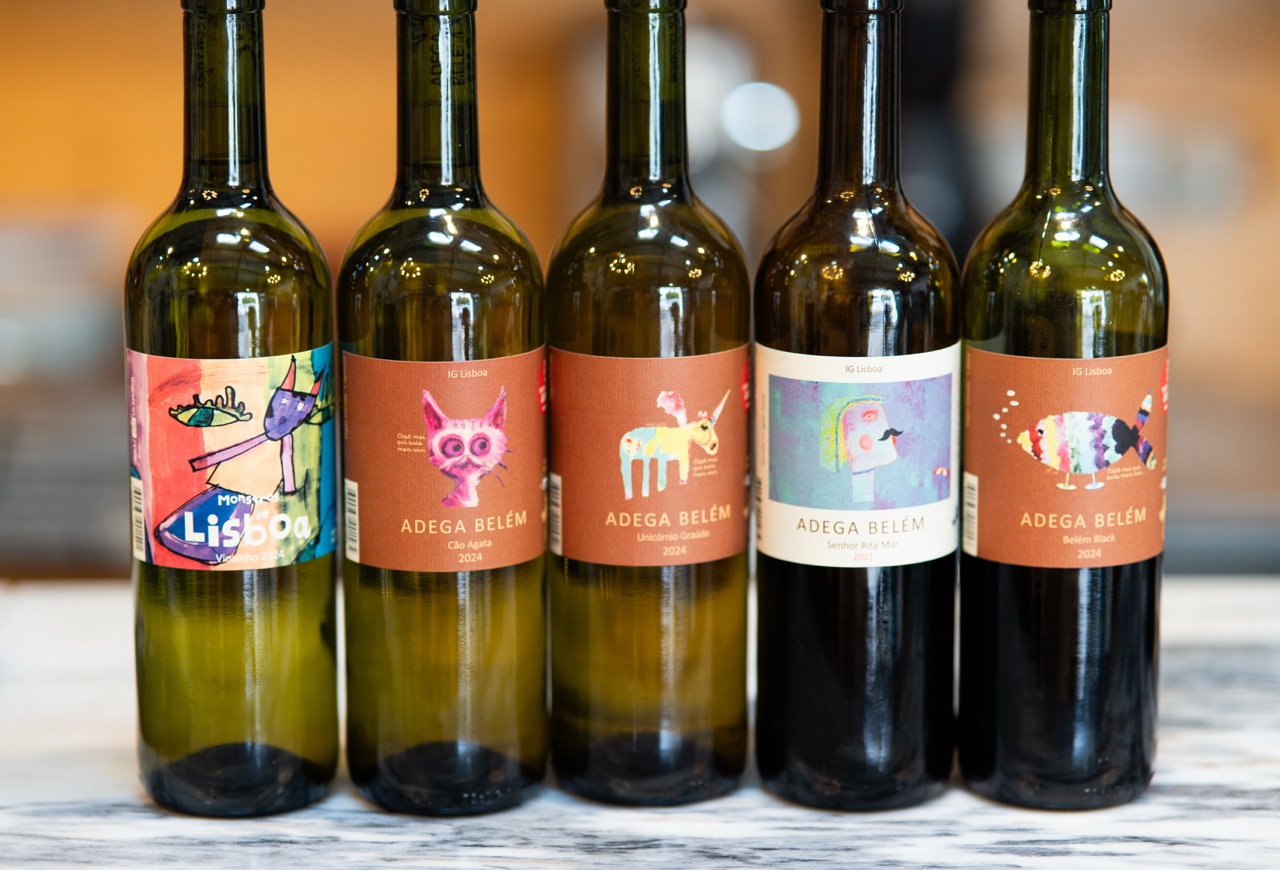
David pours their artistic funny labels one by one—Monstros de Lisboa (Viosinho), Cão Agata (Arinto), Unicórnio Graúdo (Moscatel Graúdo)—all single varietals, all 2024 vintage. These three are a ladder of increasing oxidative character and tannin intensity, from fresh and easy Viosinho with whispering citrusy acidity to quite more explosive Arinto and ending with intense and lively-tannic Moscatel (which is orange-style, very dry and very special wine taste-wise—causals shouldn’t fall for the familiar name!). Of those three, easy to pick a favorite.
Despite the winery’s small-scale Catarina and David aren’t just making wine on a whim: their journey involved formal oenology studies at the Universities of Lisbon and Geisenheim, followed by hands-on experience in regions ranging from the Alentejo to the Swiss Valais. Some of the grapes are actually sourced from the Universities of Lisbon’s vineyard nearby, but most are coming from the surrounding IG Lisboa appellation, outside the city.
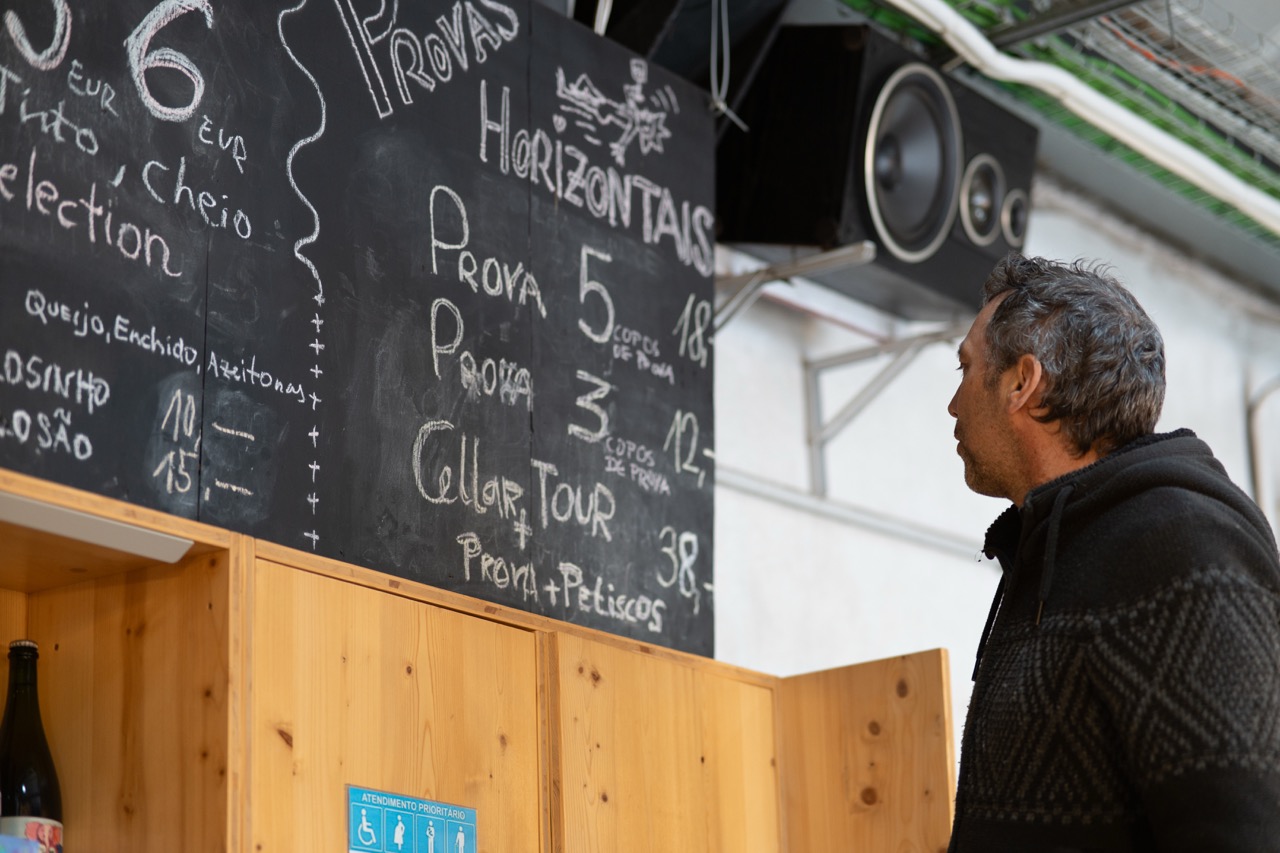
In fact, the winery used to be a car repair shop and undertook an extensive renovation to transform the mechanical space into winemaking and tasting facility. It feels like home, though, and a kids’ playground at the same time. Adega Belém uses the Iberian tree frog as its totem, symbolizing the innovation that comes from “outliers” and the merging of different backgrounds, but mostly because Catarina as a biologist used to deal with frogs quite a lot.
As for the reds, Argonautas da Minha Rua 2024 is the ultimate “glou glou” red, this Castelão is defined by its effortless drinkability and playful balance. Senhor Rita Star Castelão 2021, on the other hand, gravitates towards classic expression with an emphasized wood component. Belém Black, also ’24, is a surprise for cold cuts and medium-rare lovers: a deeply pigmented red packs a punch with an abundance of color and bold fruit flavors—Alicante Bouschet grape at your service with lively semi-carbonic overtones.
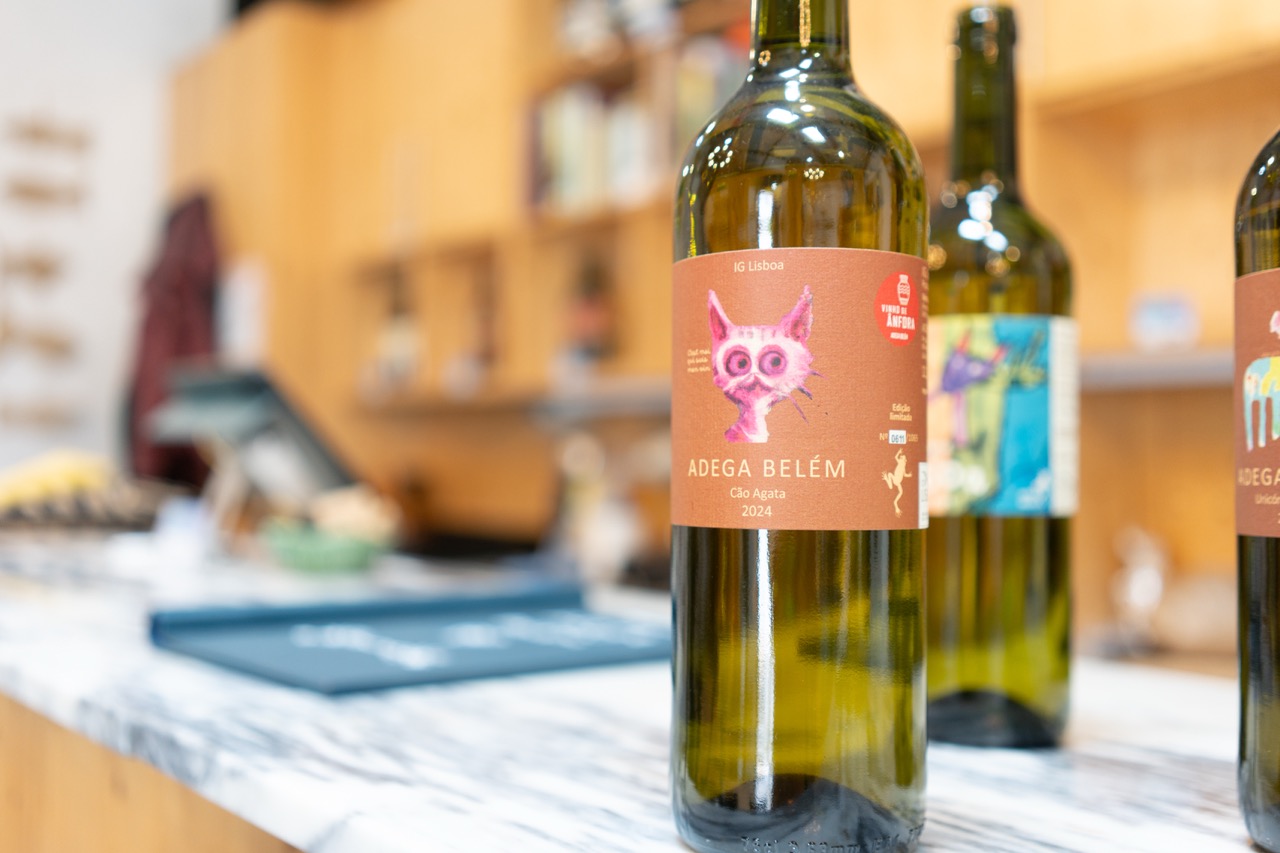
WTF is this, you ask? I’ll tell ya: think of wine still fermenting in your mouth. In professions circles it’s called “live wine,” I think. And, boy, I’m lovin’ it!
By the way, all Adega Belém wines are fermented spontaneously, meaning, no commercial lees are used to fire up the fermentation, plus, happily skipping sulfites addition. Utilizing oxygen-permeable clay amphorae to manage high tannin concentrations in specific batches is another nice feature to employ. Recent experiments include foot-stomped whole-bunch fermentation for white wines to amplify viscosity and aroma. Most reds are fermented as whole berries, say “hello” from far away to Burgundy’s Gamay.
Guys also produce two sparklings—one creamy, cloudy Pet-Nat, one Encruzado via the classic Champagne method and an intriguing fortified well-balanced Carcavelos, the Lisbon area’s downscaled answer to Douro’s Ports.