




Flooded by tourists, the famous Rua das Flores in Porto is steaming hot in the end of May. Years ago, in the 80s-90s, Mateus, sitting in front of me with a glass of his Mater-Dôme Branco (well, “white”), played here, barefoot. “This areas was in total decline,”—he says. “No tourists around.” “Ok,”—I say. “Woa.” As undiscovered as was Porto back then, Douro is still largely hiding its dry wine secrets from an unsuspecting commoner. Yet, it’s one of the oldest wine regions in the world and my friend is helping me unearth at least a part of it, a Foz Côa part in the subregion called Douro Superior.
Be not afraid, Vila Nova de Foz Côa is just a small village almost as far from Porto to the Spanish border as humanly possible. For most of us the Douro remains a rough picture: Port, steep terraces, heat, old vines, red wines with shoulders. And while all true enough, the valley is not one simple thing. The west is cooler and wetter. The east, near Spain, is dry and severe. And, yes, white grapes matter more than people outside Portugal realize.
My guide, Mateus Nicolau de Almeida, comes from one of the central families of modern Douro wine. His grandfather, Fernando Nicolau de Almeida, created Barca Velha in the 1950s. For those who don’t follow Portuguese wine mythology: Barca Velha is the country’s most famous red wine, the bottle that showed the Douro could be smothering more than just fortified wine. Rare, expensive, and discussed with the kind of solemn face people usually reserve for cathedrals, definitely not my kind of wine.
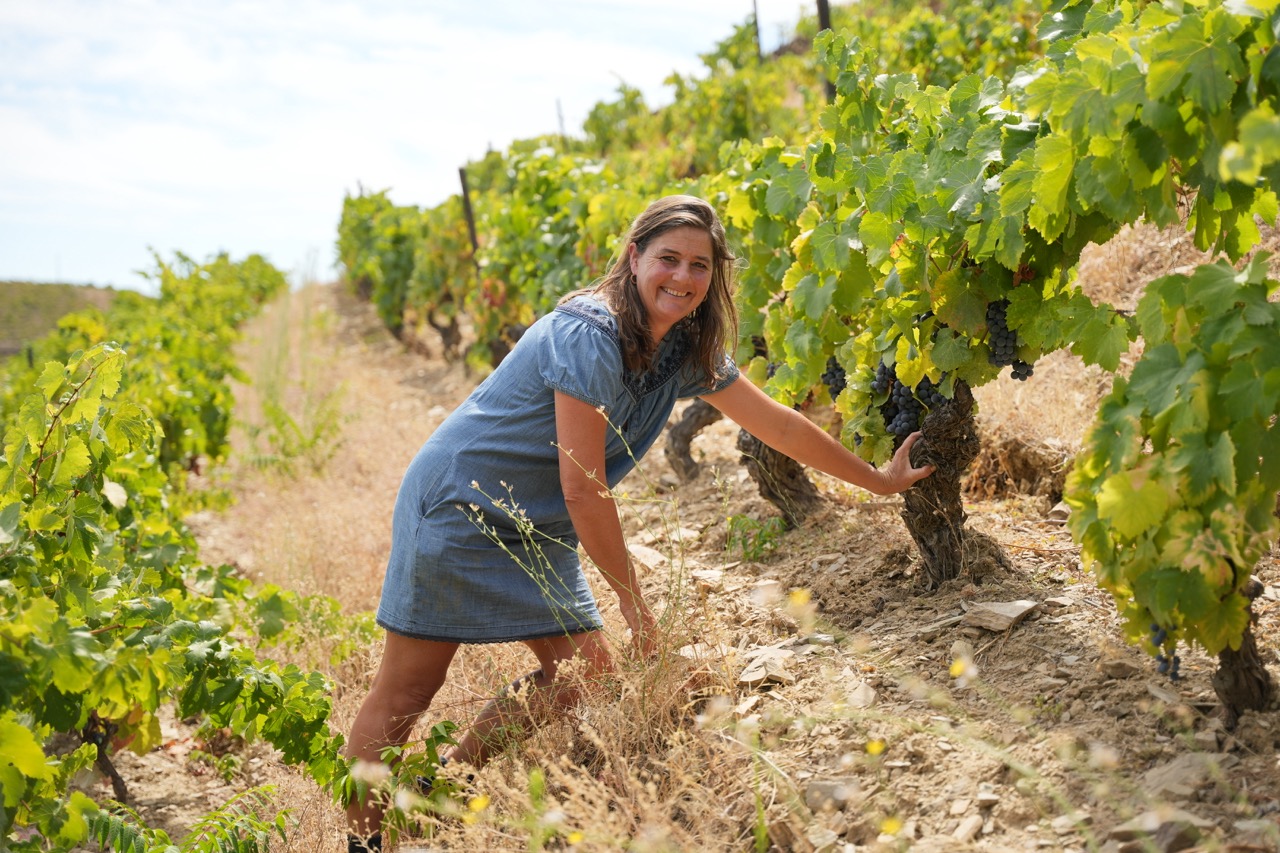
João Nicolau de Almeida, Fernando’s son, became one of the major figures at Ramos Pinto, the historic Port house, and helped shape the modern still-wine identity of the region. What I want to say is that Mateus didn’t discover wine after a spiritual weekend in Tuscany. He was born into it. Family, cellars, vineyards, experiments, reputation, pressure. This sort of inheritance can easily become a trap. A good line for a press release would be: famous grandfather, famous father, talented son. But wine is more unpredictable and uncompromising than that.
Mateus works along with his wife, dear Teresa Ameztoy, a Basque from San Sebastián, trained in oenology, and a former head winemaker at the very same Ramos Pinto, before joining Nicolau de Almeida’s project fully. Teresa tends to disappear in accounts of the winery because the Nicolau de Almeida name arrives carrying so much history, but that misses half the picture. She spent years making wine at a high level before the couple’s own project became the centre of their work. The Basque connection is not just a biographical detail either. Coming from outside the Douro valley most probably gives her a certain freedom from its inherited assumptions and rigid approaches. The project feels less like a dynasty being extended and more like two experienced winemakers testing ideas against each other, arguing, refining, and arriving at something neither would have made alone.
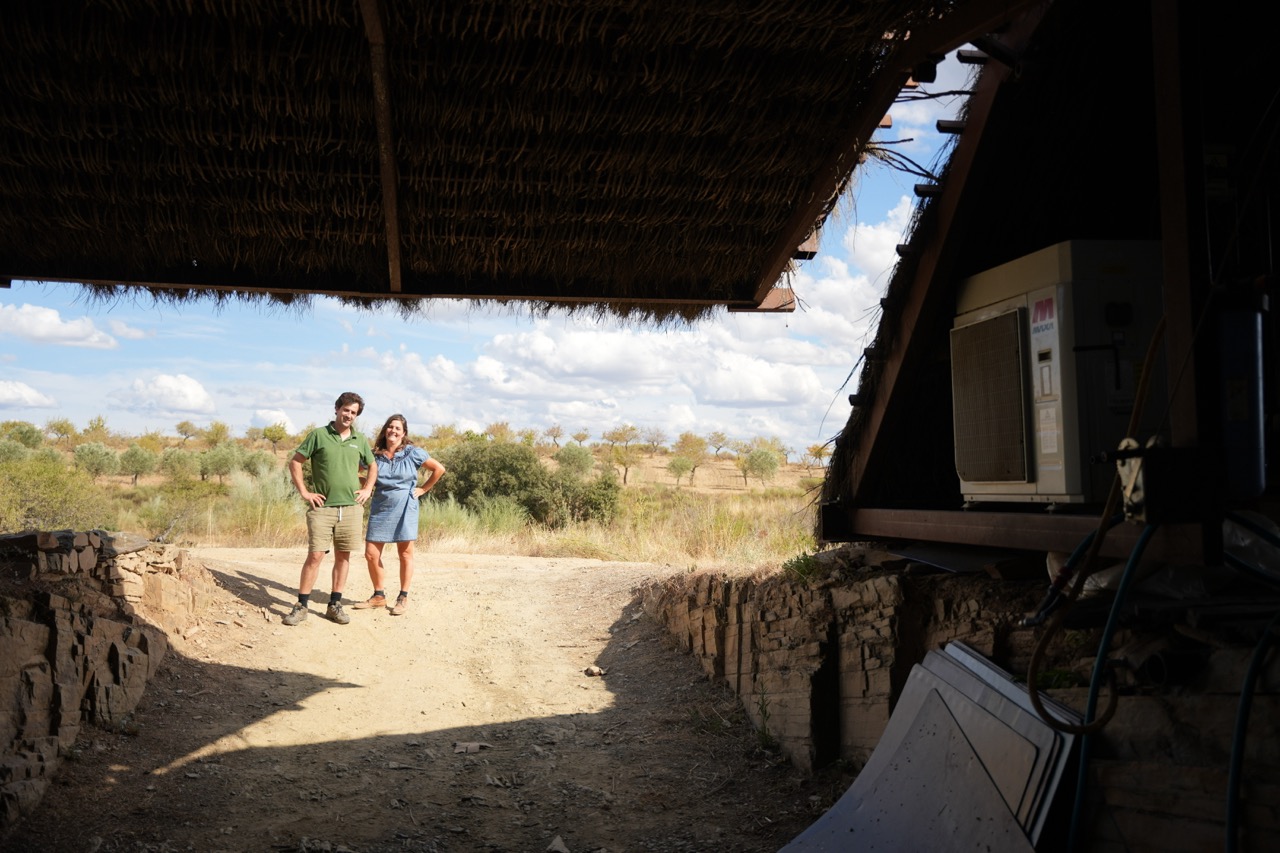
Their base is called Adega do Sável: Sável being a shad fish that once migrated up the Douro before the dams stopped that journey. The fish is gone, the river changed, but the name stayed. The wines themselves do not feel mournful. That is the useful part. They are alert, dry-eyed, and specific.
Distinct bottle shapes is another point with their wines. In the Douro, if you make still wine, you almost automatically reach for a standard Bordeaux or Burgundy bottle. It is the lazy, accepted default. The irony is that the only true, native bottle shape this valley ever actually invented was the sturdy glass built for fortified Port—built for high alcohol. So when it comes to dry wines, the region has always borrowed its visual identity from France. Mateus wanted a distinct identity for these projects, so he skipped the standard templates entirely and put his still wines into tall, slender Rhine flutes. When everyone else defaults to Burgundy, he goes to the Rhine. It is a clean break from the valley’s conformity, and he is practically the only producer here doing it systematically. Before you even pull the cork, the glass itself tells you that you are not about to drink a typical, heavy Douro cliché.
The first door is Rabigato, the grape Amon de Kelia 2023 is made from, one of the Douro’s old white grapes. Outside Portugal, Rabigato is hardly a household name. It sounds like it could be a lawyer, a pharmacy chain, or a very small municipality with difficult parking. In the Douro Superior, handled seriously, Rabigato can give wines with acidity, texture and gunpowder line that doesn’t need decoration. Amon de Kelia starts quietly. Flint, dust, white flowers, white peach. The aroma is almost neutral at first, but not blank. The wine has volume. That was what caught me. It is not just a blade of acidity. There is a dry, mineral feeling, and the whole thing stays slightly reserved, as if it has no reason to perform for strangers.
Mateus speaks about Rabigato as a grape that can carry soil clearly. A dangerous sentence in most mouths; it can become instant brochure language. Here it works because the wines don’t taste like theory.
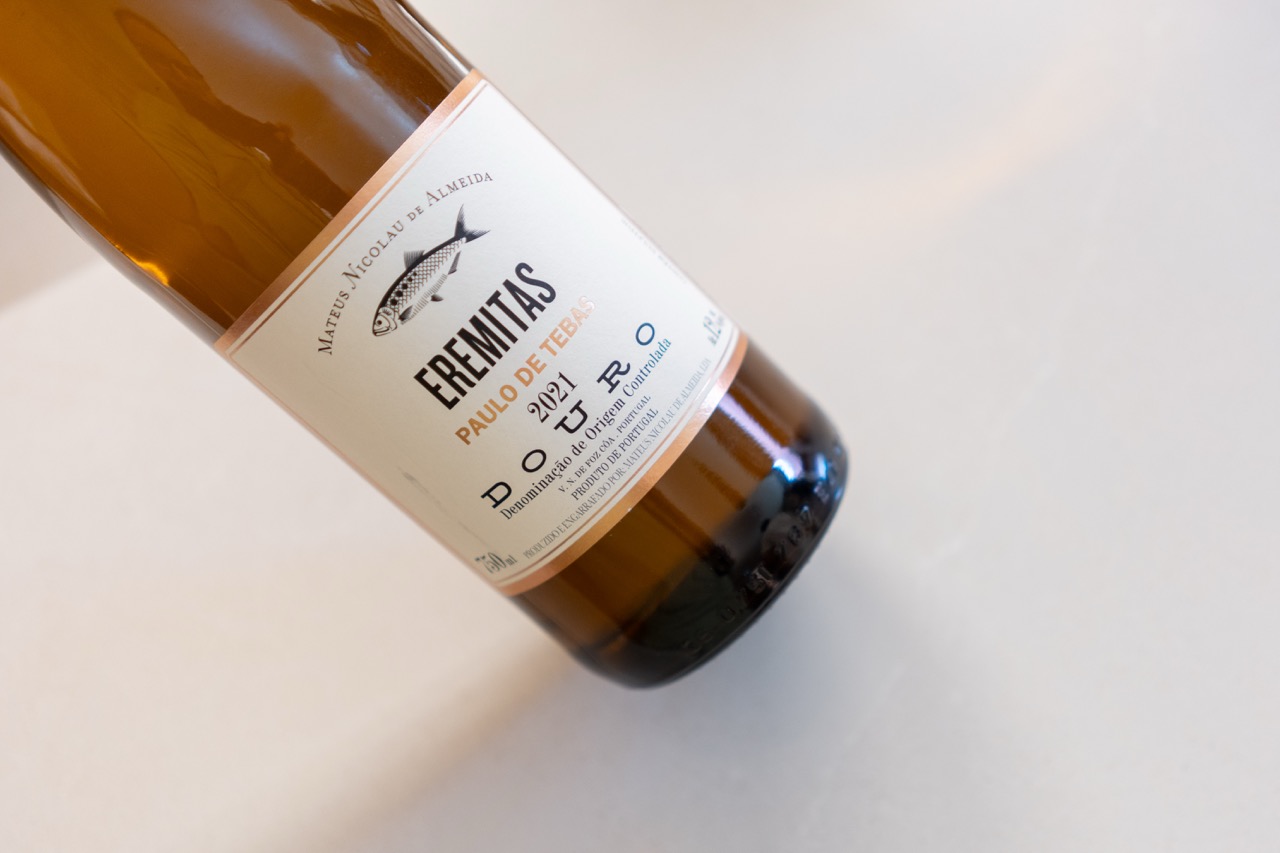
Another ‘Eremitas’ wine, Paulo de Tebas 2021, makes the point with more force. Same grape, but way more depth. Gunpowder, stronger minerality, more structure, more future. Mateus says he prefers these whites with about five years of bottle age. With Paulo de Tebas, that sounds right. Fruit is present, but not central. The wine is built more around texture, stone, pressure and length. One of the strongest glasses of the day.
The method behind these whites is local and deliberately plain: whole bunches, foot treading, concrete. Mateus mentioned the calcatorium, an old shallow stone structure, an ancestor of the modern lagar. The wines do not taste ancient. They taste clean of extra noise. It seems the winemakers pair is not trying to make the Douro sound like Burgundy, Jura, Rioja, or anywhere else currently useful in the international wine conversation. If you even try to copy another region’s method without thinking, you lose your own place.
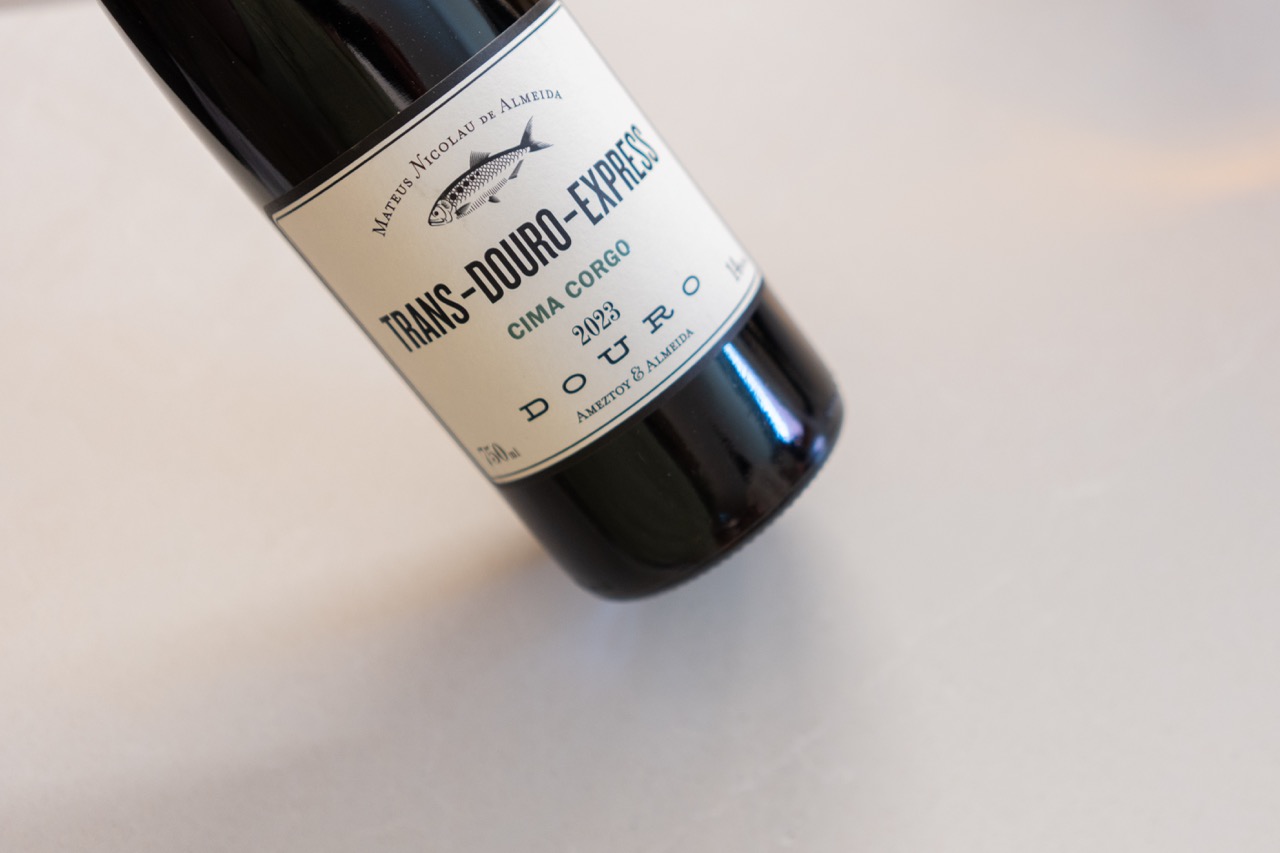
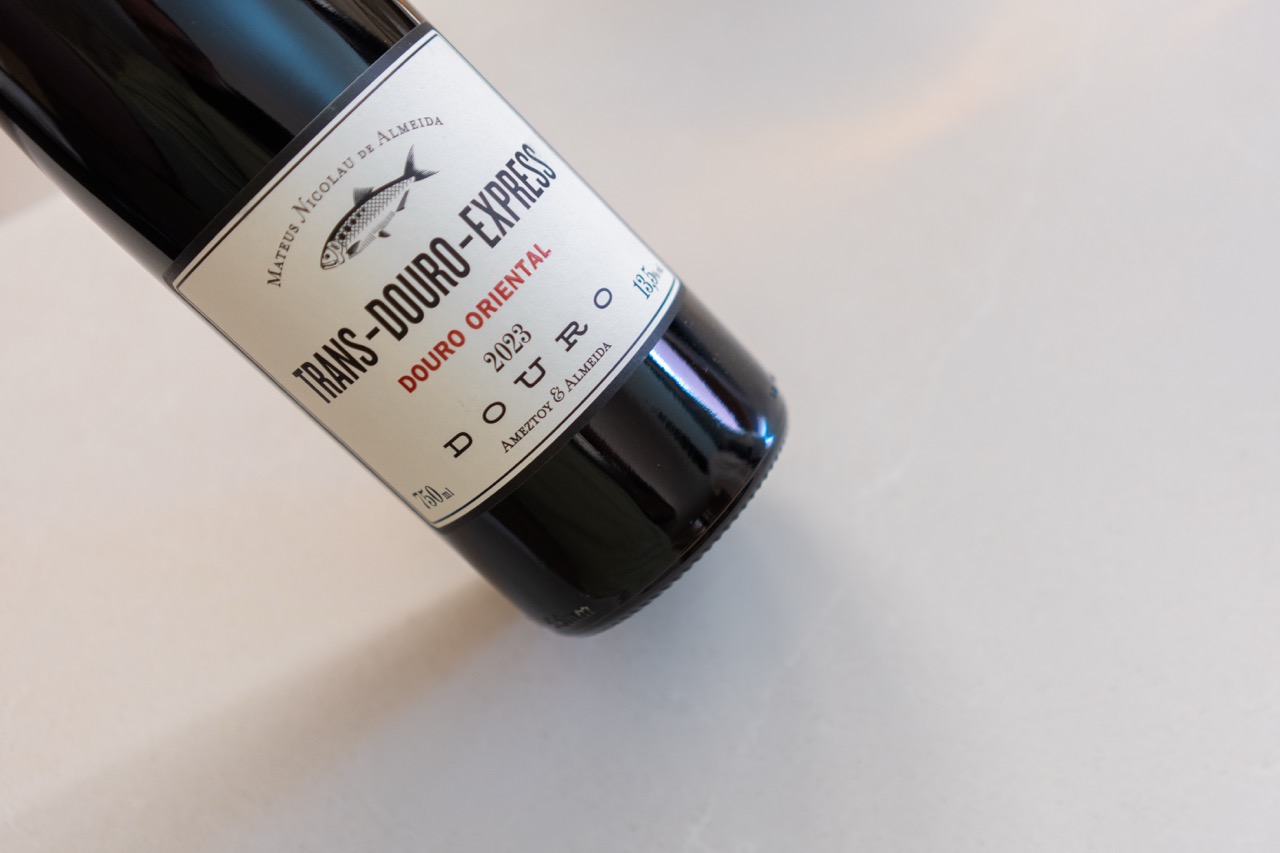
Trans-Douro-Express wines is Mateus’ attempt to make the Douro stop pretending to be a single place (which frankly is the worst thing that could happen to a wine region’s identity). The line follows the river from west to east—Baixo Corgo, Cima Corgo, Douro Oriental—and keeps the cellar work deliberately neutral: old-vine field blends, same basic approach, concrete instead of oak. The desire to make the differences readable is obvious, and Mateus confirms it. In the cooler Baixo Corgo, the tannins are sharper and the fruit feels more lifted. In Cima Corgo, the wine moves toward rounder dark fruit and a more familiar Douro centre. Further east, in the Douro Oriental, the dryness, spice and dusty tannins take over.
Trans-Douro-Express Baixo Corgo 2023 comes from the cooler, wetter western side. It has dark fruit, cherry, dust and a firm mineral line. The tannins are sharper, the shape more focused. Not thin, not light, not trying to be pretty. The fruit is dark but not heavy, and there is a slight roughness in the texture that gives the wine life.
This is the sort of Douro red that can surprise people who expect weight as a default setting. Baixo Corgo does not need to imitate the warmer parts of the region. Its strength is in line, freshness, and that dry dusty grip.
Trans-Douro-Express Cima Corgo 2023 is more polished. Dark fruit again, sour cherry, a smoother middle. It is probably the easiest of the three reds to read quickly, and I don’t mean to insult the winemakers. There is ripeness, but no heavy push. It feels controlled, centred, familiar in a good way.
Cima Corgo is the area many people associate with classic Douro and Port production, and the wine sits near that expectation without sinking into it. It did not stay with me as much as the Baixo Corgo or the Douro Oriental, but it is very well judged.
Trans-Douro-Express Douro Oriental 2023 is the one I kept returning to in my head. More depth, more freshness, a very dry feel, dark fruit, herbs, and dusty tannins. The fruit is darker and more spiced, but the wine does not become soft. The Douro Superior can be a harsh place. Hot summers, cold winters, low rainfall, hard light. This wine does not hide that. It carries heat and dryness without becoming tired. The tannins feel native to the place, not polished flat for comfort. There is grip, but not heaviness.
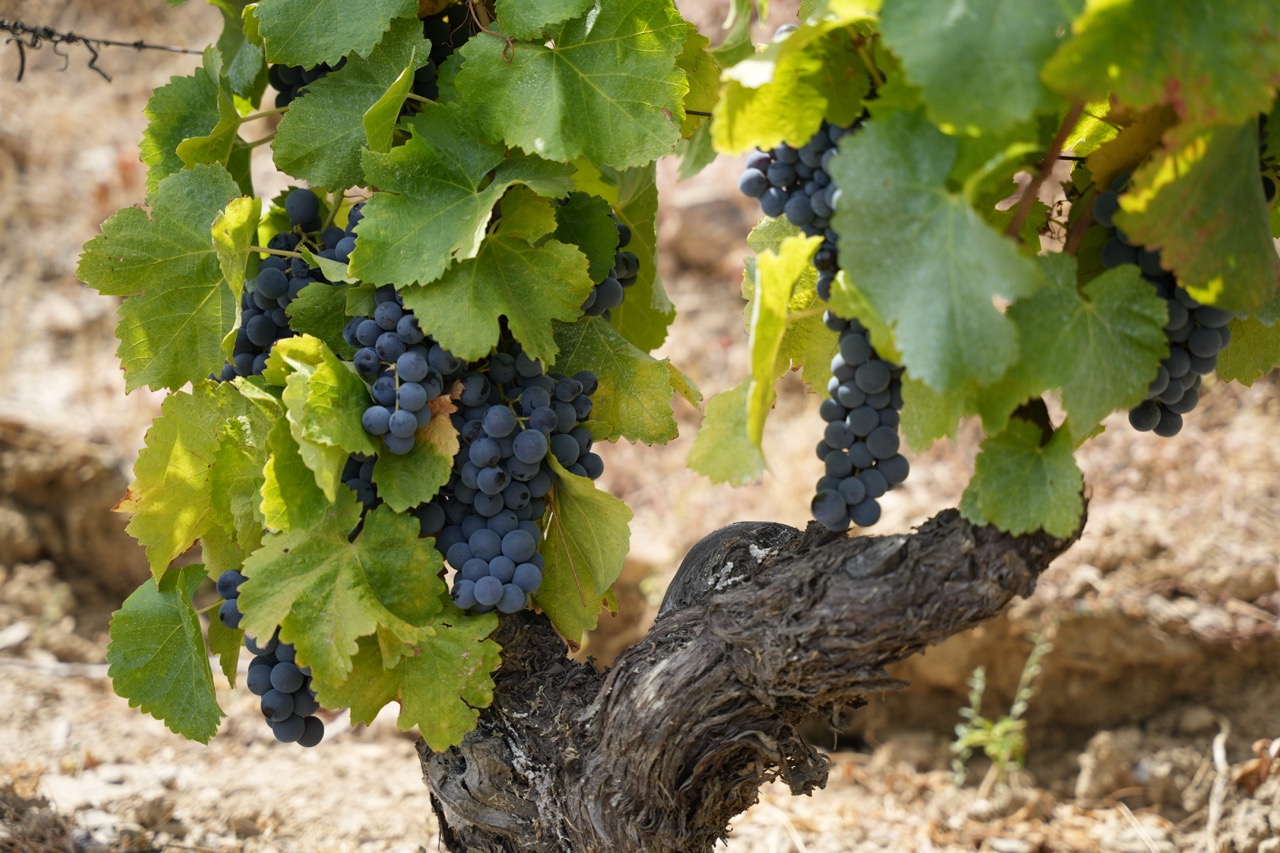
All three reds are aged in concrete, not oak. Mateus uses wood elsewhere, so this is not anti-oak theatre. Here concrete makes sense. It gives the wines air without adding vanilla, toast or sweet spice. The differences between Baixo Corgo, Cima Corgo and Douro Oriental remain visible.
Visible is enough. No need for fireworks.
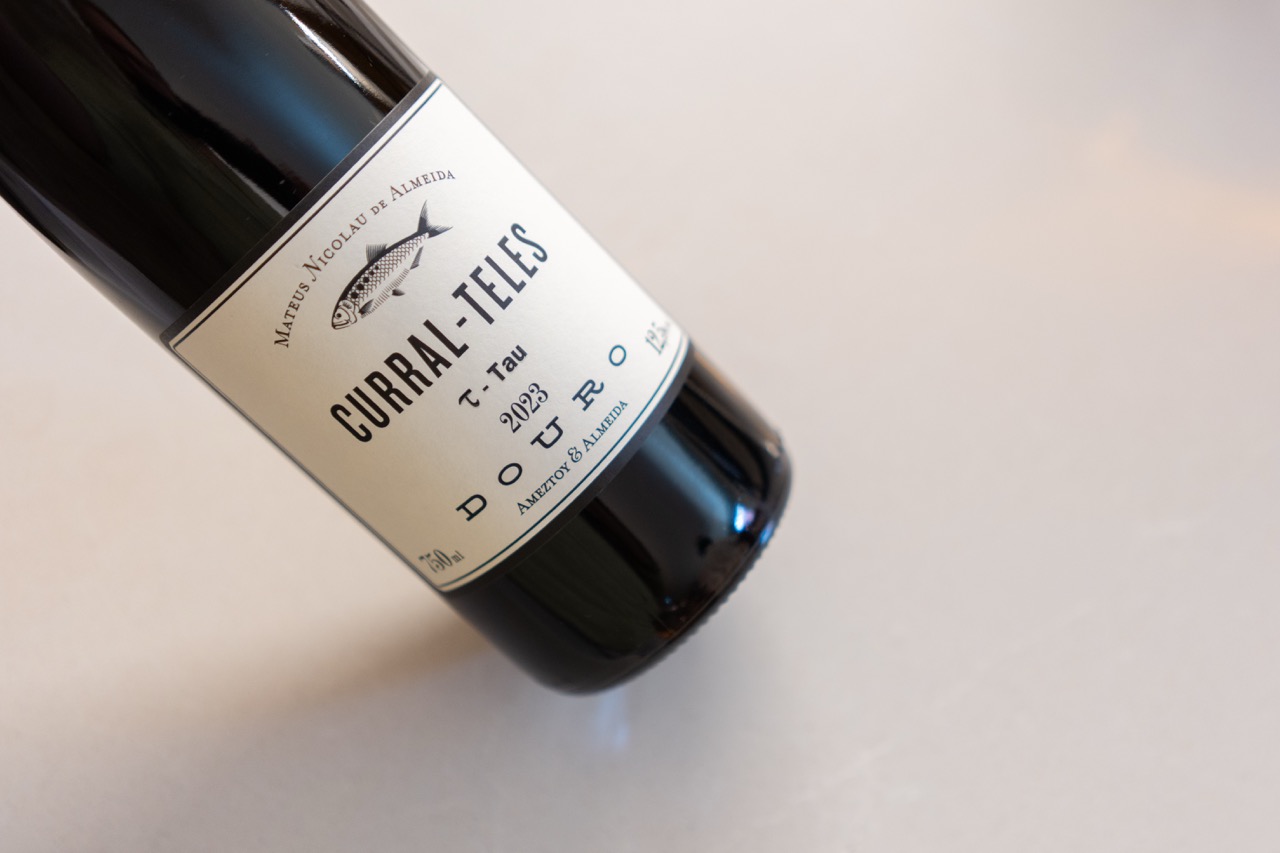
Curral Teles – Tau 2023 is a different animal. A field blend, more cellar-shaped, with wood much more present. My notes say coconut wood, roundness, oxygenation. The wine is softer, more worked, less direct than the Trans-Douro reds. For my taste, the wood is quite visible, but the wine has substance behind it, and it tells another part of the story. Mateus is not making every wine pretend it arrived untouched from the vineyard. Tau shows the hand. You can agree with the choice or not; at least the choice is there.
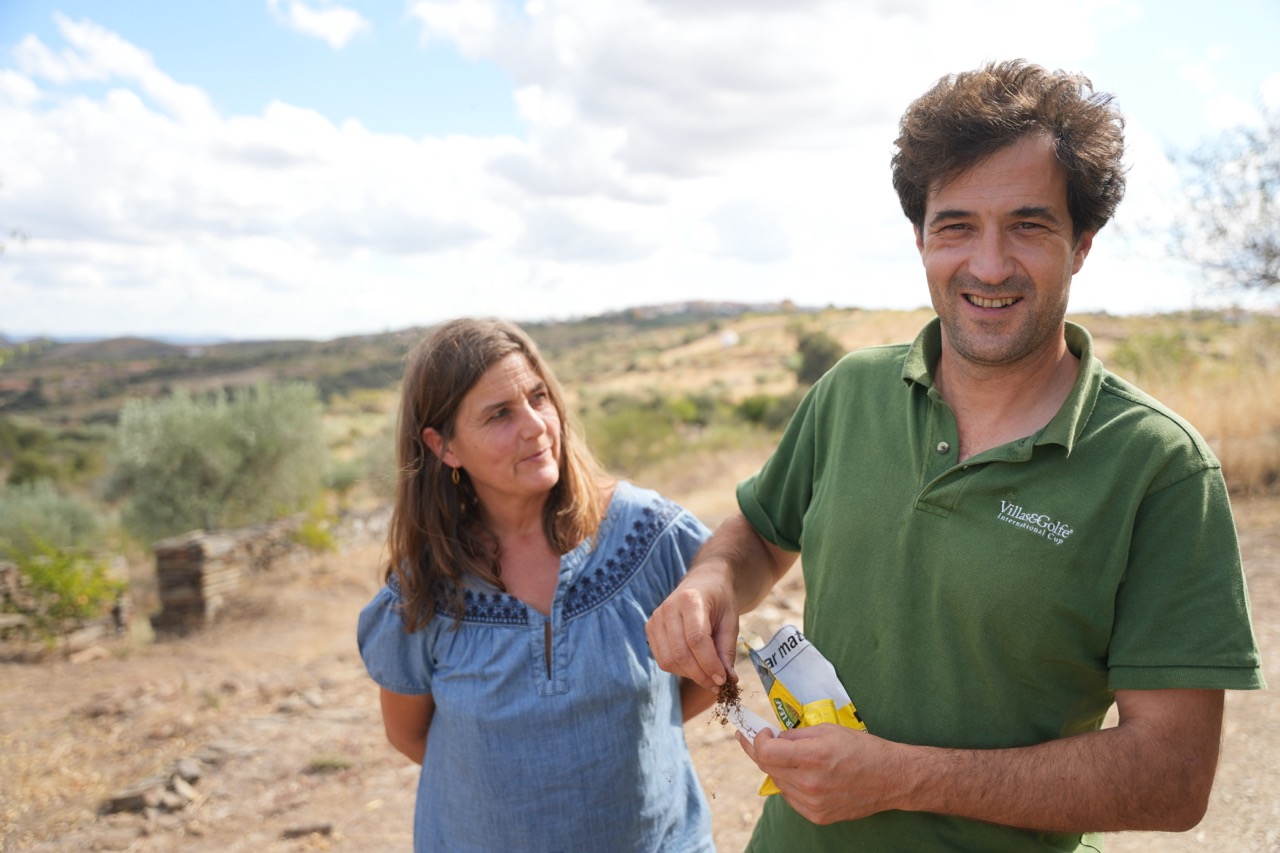
This is where the family background becomes more interesting than the usual great-grandfather/father/son paragraph. Mateus doesn’t talk about the past with sentimental syrup. Interestingly, his father and grandfather didn’t teach by giving exact instructions, I specifically asked. He watched, followed, asked, absorbed, and then had to find his own direction by studying and doing internships around the world.
That may be the only sane way to inherit a famous name. Otherwise the name starts making the wines before you do.
Finally, the Port was a quiet surprise. Ameztoy & Almeida Vinha dos Trinta Vinho do Porto – Ruby comes from an old vineyard with more than thirty traditional varieties. It has 18% alcohol, but it does not feel heavy. My notes are simple: “fantastic, easy Port, great balance of sugar and acidity, good depth, very friendly.”
And “friendly” is not a small compliment here. It means the wine is open and drinkable without becoming simple. Sweetness is there, but acidity holds it. There is depth, but no sticky heaviness. It feels like something to drink at the table, not something to pour into a tiny glass (which Mateus opposes) at the end of dinner when everyone has already lost the will to continue. I agree—never give out small glasses if you want people to heartily drink a bottle.
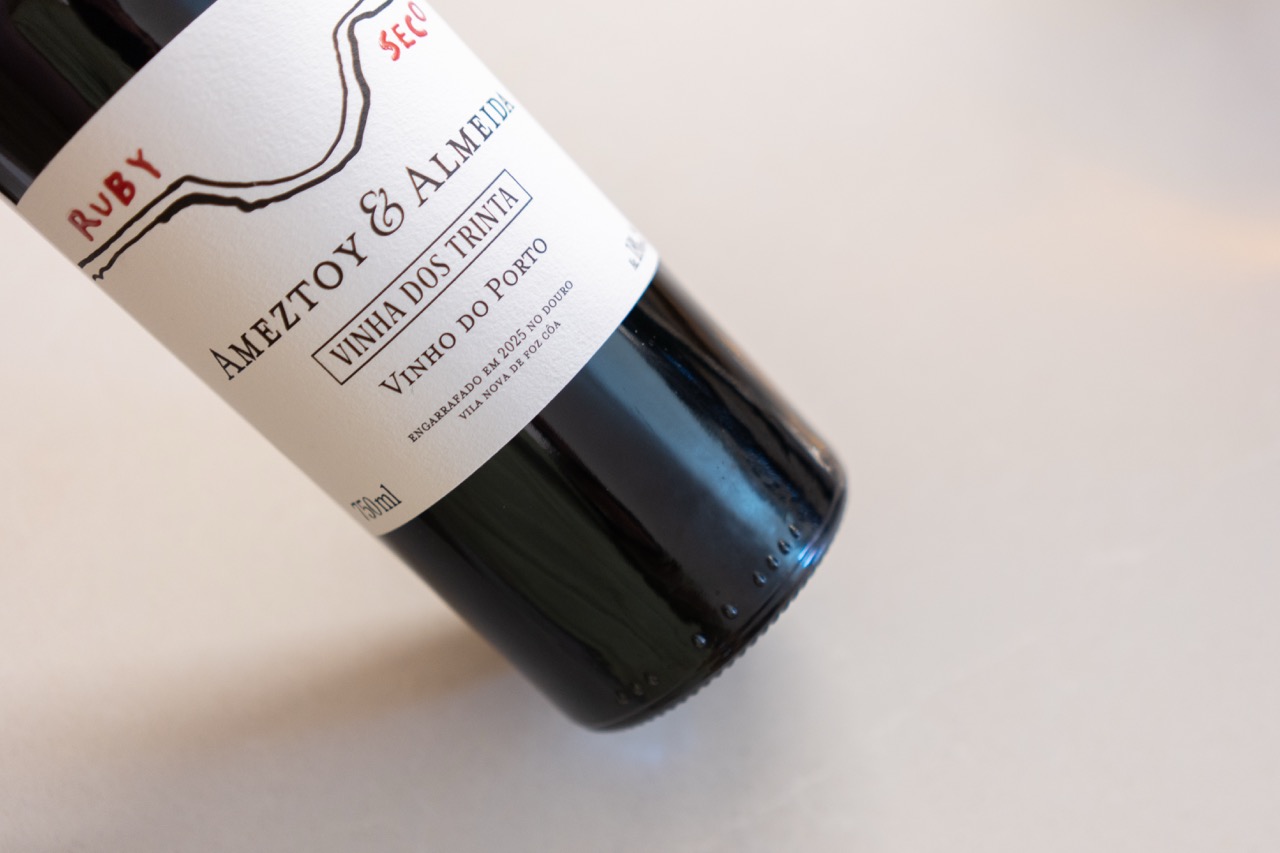
By the way, they had to push to get the official certification under Ruby Seco, a historical category that had almost disappeared from practical use. His point is not nostalgia. Port was not always as sweet and fixed as the modern shelf suggests. Styles changed, markets changed and categories hardened. Some doors can still be pushed open if someone has the patience to argue with the right office for long enough.
What runs through these wines is specificity. Rabigato from particular soils. Reds from different parts of the Douro. A field blend where wood and oxygen are part of the result. A Port that does not behave like a syrupy monument.
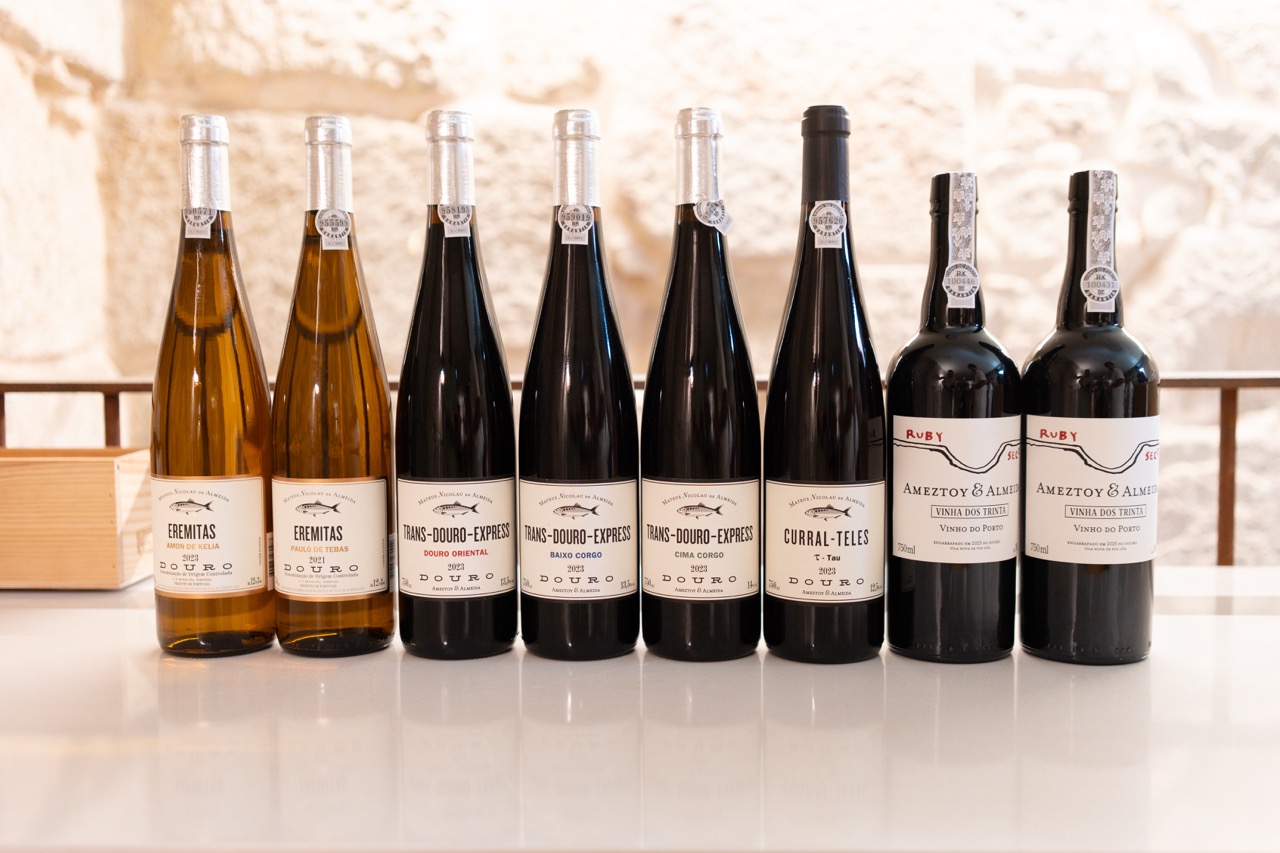
Mateus and Teresa’s bottlings are among my favorite in the Douro now because of precision, complexity and intellectual pleasure you get when dealing with them. I would not pretend to understand the whole project from one encounter. That would be too quick and too clean. These wines need more bottles, more vintages, more time in the vineyards. For now, the useful thing is simpler: after tasting them, the Douro looks less like one fixed image and more like a place worth arguing with.
Mateus and Teresa would probably not mind the argument.
Wines tasted:
- Mateus Nicolau de Almeida | Eremitas – Amon de Kelia 2023 — quiet, dusty, floral, and textured.
- Mateus Nicolau de Almeida | Eremitas – Paulo de Tebas 2021 — deeper, flintier, more reserved, and built for time.
- Mateus Nicolau de Almeida | Trans-Douro-Express – Baixo Corgo 2023 — dark-fruited, firm, and cooler in line.
- Mateus Nicolau de Almeida | Trans-Douro-Express – Cima Corgo 2023 — polished, balanced, and more immediately open.
- Mateus Nicolau de Almeida | Trans-Douro-Express – Douro Oriental 2023 — dry, herbal, fresh, and gripped by dusty tannins.
- Mateus Nicolau de Almeida | Curral Teles – Tau 2023 — rounder, more marked by wood and oxygen.
- Ameztoy & Almeida | Vinha dos Trinta Vinho do Porto – Ruby — balanced, open, fresh enough, and far more drinkable than many people expect Port to be.